Some travellers come to the Emirates for the skylines and the speed, and some come to escape them. Umm Al Quwain is for the second kind. The smallest and least crowded of the seven emirates, it sits on a low peninsula barely an hour north of Dubai, yet it feels generations away from the towers. There are no megamalls here and no rush, only a long shallow lagoon fringed with mangroves, a barrier island that recently gave up an extraordinary secret, and an old town of coral-stone houses drowsing beside a working fishing harbour. For anyone tired of Dubai's pace, or simply curious about what the country was like before the boom, it is the easiest place to slow right down. This guide covers what Umm Al Quwain holds, from the birds of Khor Al Beidah to the monastery on Siniyah Island and the quiet streets of the old town, and how a private day brings its unhurried rhythm within comfortable reach.
The quietest of the seven emirates
Umm Al Quwain is the one emirate most visitors could not place on a map, and that anonymity is precisely its charm. Wedged between Ajman and Ras Al Khaimah on the northern coast, it is the least populous of the seven and one of the smallest, a single small town and its surroundings rather than a sprawling city. Where its neighbours chase development, it has stayed largely as it was: a fishing and farming emirate built around a sheltered lagoon, with a pace that belongs to an earlier Arabia.
That stillness is the whole point. Nothing here competes for your attention, so the things that remain, the birds over the water, the old coral houses, the dhows in the harbour, come into focus in a way they never could amid the noise of the bigger cities. It is not a place of headline sights but of atmosphere, and it rewards anyone willing to trade spectacle for calm. For a group-format visit, gett.travel keeps a dedicated Umm Al Quwain guide.
- The least populous and one of the smallest of the seven emirates
- On the northern coast, between Ajman and Ras Al Khaimah
- Barely an hour's drive north of Dubai
- Khor Al Beidah, a tidal lagoon rich in flamingos and migratory birds
- Siniyah Island, where an ancient Christian monastery was uncovered
- An old town of coral-stone houses, a historic fort and a fishing harbour
An hour north of Dubai
Part of the appeal of Umm Al Quwain is how little it takes to reach it. The drive from Dubai runs up the coast for around an hour, past Sharjah and Ajman, until the towers thin out and the road opens onto flat, sandy country edged by water. There are no mountains to cross and no long haul, just a steady shift in mood as the city falls away behind you.
Because it is so close, it makes an easy day rather than an expedition, and it pairs naturally with neighbouring Ajman if you want to combine two of the calmest emirates in one outing, or with a livelier stop at Dreamland Aqua Park if you are travelling with children. On a private day there is no timetable to keep: you arrive when you like, linger where it suits you, and let the slower tempo of the north set the pace.
Khor Al Beidah: mangroves and birds
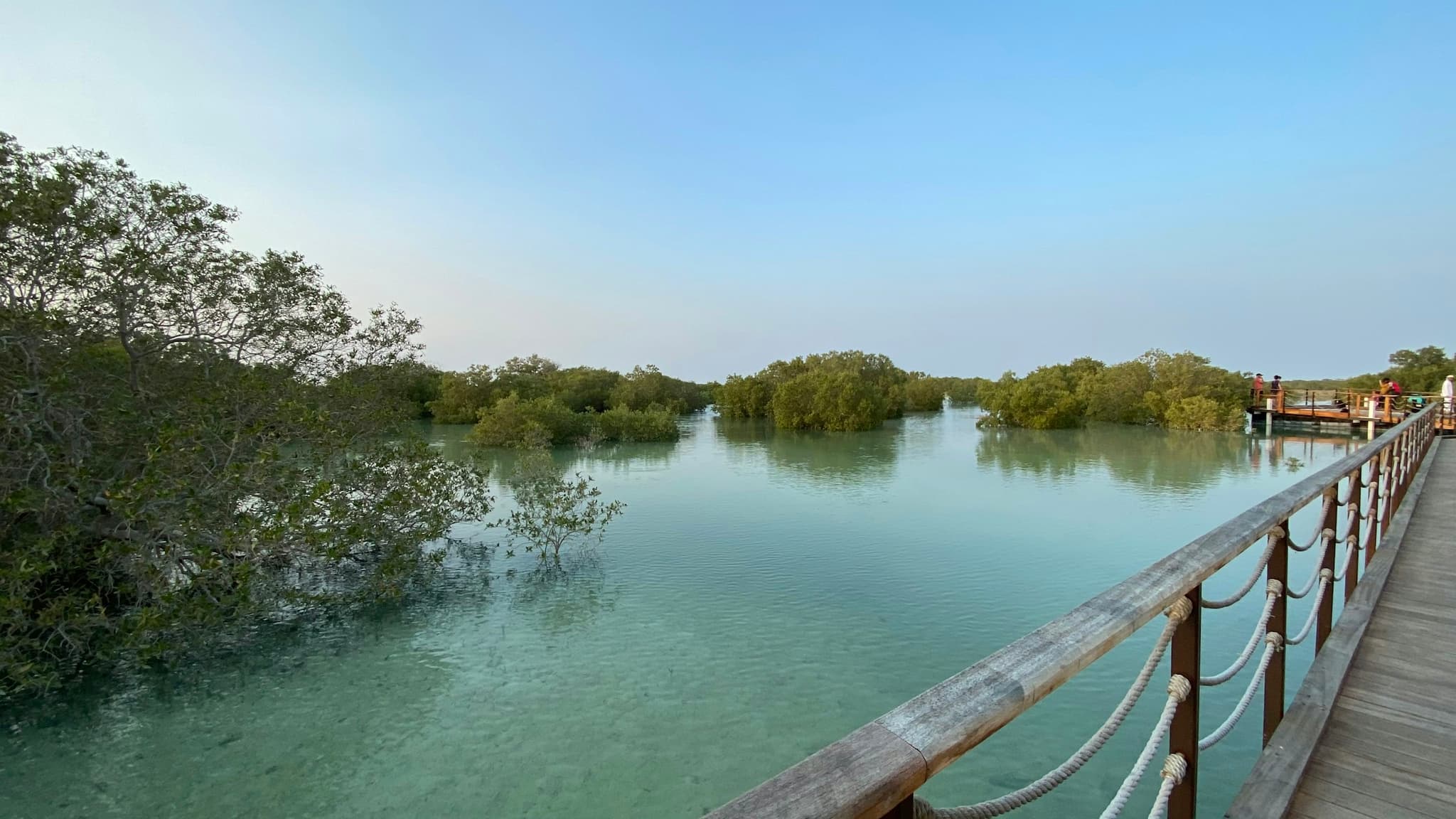
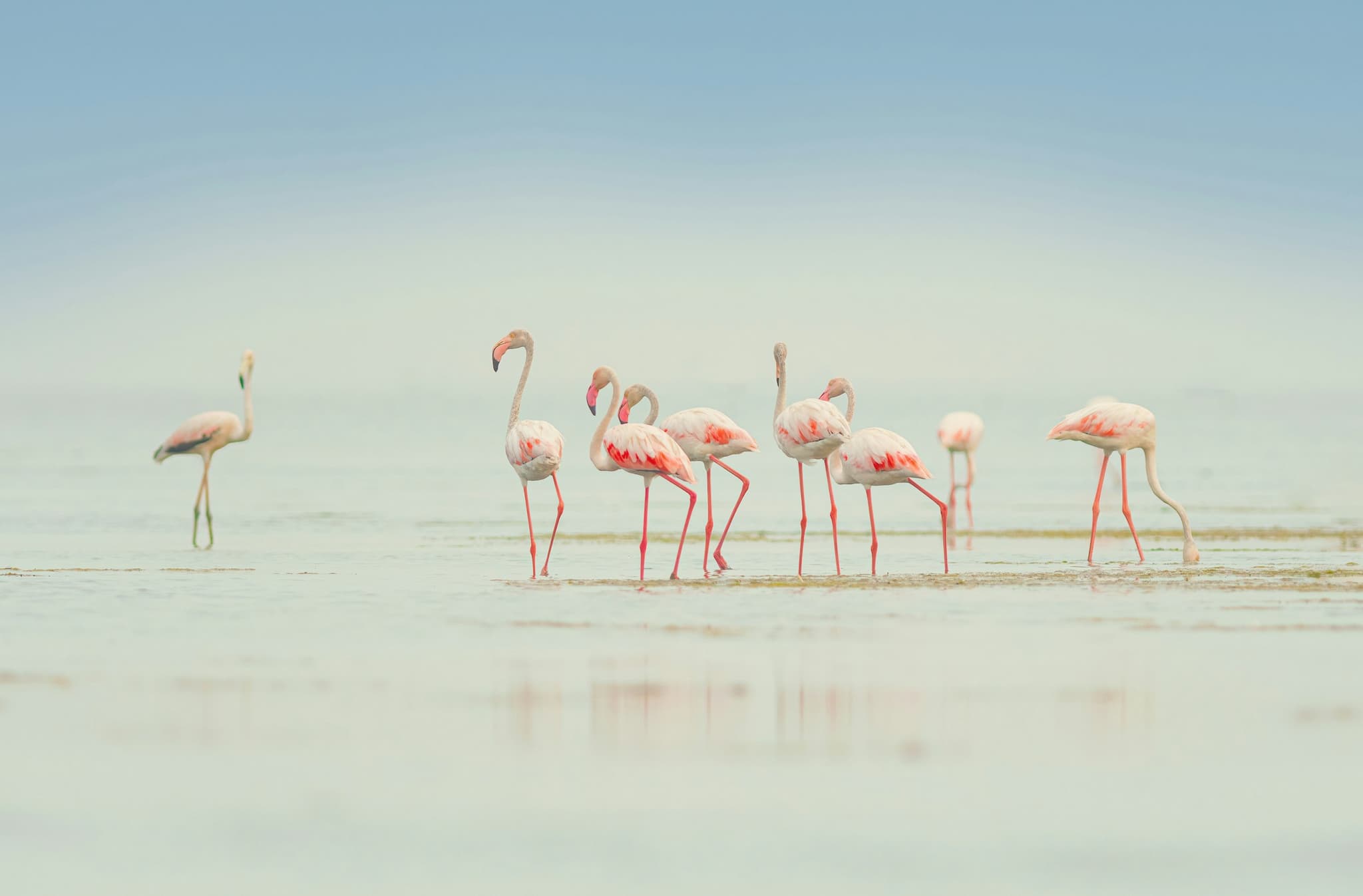
The natural heart of Umm Al Quwain is Khor Al Beidah, a broad tidal lagoon of mangroves, creeks and pale sandflats that stretches along the coast south of the old town. As the tide draws back it exposes mile upon mile of mudflats, and these shallows are one of the most important bird habitats in the country. Flamingos wade in the distance, herons stalk the channels, and in the cooler months thousands of migratory waders pass through, including the rare crab plover that breeds along this coast.
It is a place to slow down and simply watch. A quiet walk along the mangroves, binoculars in hand, turns up far more than a glance suggests, and the light over the water at either end of the day is reason enough to come. There is none of the infrastructure of a managed park here, only the lagoon, the birds and the silence, which is exactly what makes it feel unspoiled. For those who would rather explore by kayak, the Al Zorah mangroves in neighbouring Ajman offer a similar private paddle among flamingos and resident birds, a short drive south.
Siniyah Island and its buried monastery
Sheltering the lagoon from the open sea is Siniyah Island, a low spit of sand and scrub that until recently few outsiders had heard of. That changed when archaeologists digging there uncovered the remains of an ancient Christian monastery, dated to somewhere between the sixth and eighth centuries, one of the oldest known in the whole Gulf. Built long before Islam reached these shores, it speaks of a forgotten chapter when Christian communities lived and traded along this coast.
Around it lie the traces of an early pearling town, a reminder that the waters here were worked for their oysters centuries ago. The island itself is a protected wilderness of birdlife and quiet beaches, and even seen from the mainland shore, with the story of the monastery in mind, it lends Umm Al Quwain a depth of history that its sleepy present never lets on.
The old town, the fort and the harbour
Umm Al Quwain's old town occupies the tip of the peninsula, and wandering it is like stepping back decades. Narrow lanes run between houses of coral stone and gypsum, some restored and some gently crumbling, past old watchtowers and the walls of the fort that once guarded the approach. The fort, a low fortress with round towers, now holds the emirate's small museum, where pearling, fishing and the daily life of the coast are laid out room by room.
Down at the water the old harbour is still very much alive, lined with wooden dhows and the gear of a working fishing fleet. There is no polish to any of it and no crowd, just the unhurried business of a small coastal town going about its day, which is the most honest glimpse of the old Emirates you will find this close to Dubai.
A slower rhythm, by design
What Umm Al Quwain offers above all is a change of tempo. There is no checklist to race through and no pressure to be anywhere by a certain hour, and that absence is the attraction. Time spent here is measured in long walks by the lagoon, a slow look around the fort, a coffee near the harbour and a great deal of simply watching the water and the birds.
It suits travellers who already know Dubai and want its opposite, couples and friends after a peaceful day out, and anyone drawn to nature and old places rather than queues and crowds. Come expecting calm rather than excitement and Umm Al Quwain gives generously, sending you back to the city restored rather than worn out.
How to see Umm Al Quwain privately
Umm Al Quwain is spread out and barely touched by public transport, so a private day with your own guide and vehicle is by far the easiest way to take it in. A relaxed day from Dubai, roughly seven hours door to door, is enough to walk the mangroves of Khor Al Beidah, take in the view across to Siniyah Island, wander the old town and the fort, and still leave room to do nothing in particular by the harbour. With the route in your hands you choose the balance of birds, history and stillness.
It works beautifully on its own and pairs naturally with Ajman next door for a full day in the country's two quietest emirates. Tell us whether it is the lagoon and its birds, the story of the monastery or simply the slow old town that draws you, and we will shape a private day around the calm that makes Umm Al Quwain worth the short drive north.
Umm Al Quwain is the quiet answer to Dubai, the smallest and calmest of the seven emirates and barely an hour up the coast, yet a world away in pace: the mangroves and flamingos of the Khor Al Beidah lagoon, the ancient monastery uncovered on Siniyah Island, and an old town of coral houses drowsing beside a working fishing harbour. It trades spectacle for stillness, and for anyone tired of the city's speed that is exactly the appeal. A private day, around seven hours door to door, brings the birds, the history and the old town comfortably within reach, and pairs naturally with neighbouring Ajman. Message us on WhatsApp with your dates and what draws you, and we will plan a private day in the country's quietest emirate, shaped around you.