Most desert trips from Dubai promise dunes and a sunset, and little more. Mleiha, an hour inland in the emirate of Sharjah, offers all of that and something rarer: a landscape steeped in the deep history of Arabia. This is a UNESCO World Heritage candidate site where archaeologists have traced human presence back across thousands of years, where a lone rock holds marine fossils from a sea that vanished long ago, and where the day still ends among high golden dunes under a quiet, colour-soaked sky. It is a slower, more thoughtful kind of desert outing, equally rewarding for curious travellers, families and anyone who has done the usual safari and wants something with more depth. This guide explains what Mleiha is, what there is to see, when to go and why a private day makes the whole experience easier and more meaningful.
A different side of the Emirates desert
Mleiha sits inland in Sharjah, roughly an hour's drive from Dubai and closer to forty-five minutes from Sharjah city itself, where the flat coastal plain gives way to open desert and dramatic rock formations. From the moment the city falls behind, the landscape feels older and emptier, a stretch of dunes, gravel plains and weathered hills that has barely changed in centuries.
What sets Mleiha apart from a standard dune safari is the layer of history beneath the sand. This is not just scenery; it is one of the most important archaeological regions in the country, a place where the desert has preserved the traces of people who lived here long before the cities rose. The result is a day that works on two levels at once, beautiful to look at and quietly fascinating to understand.
What Mleiha is
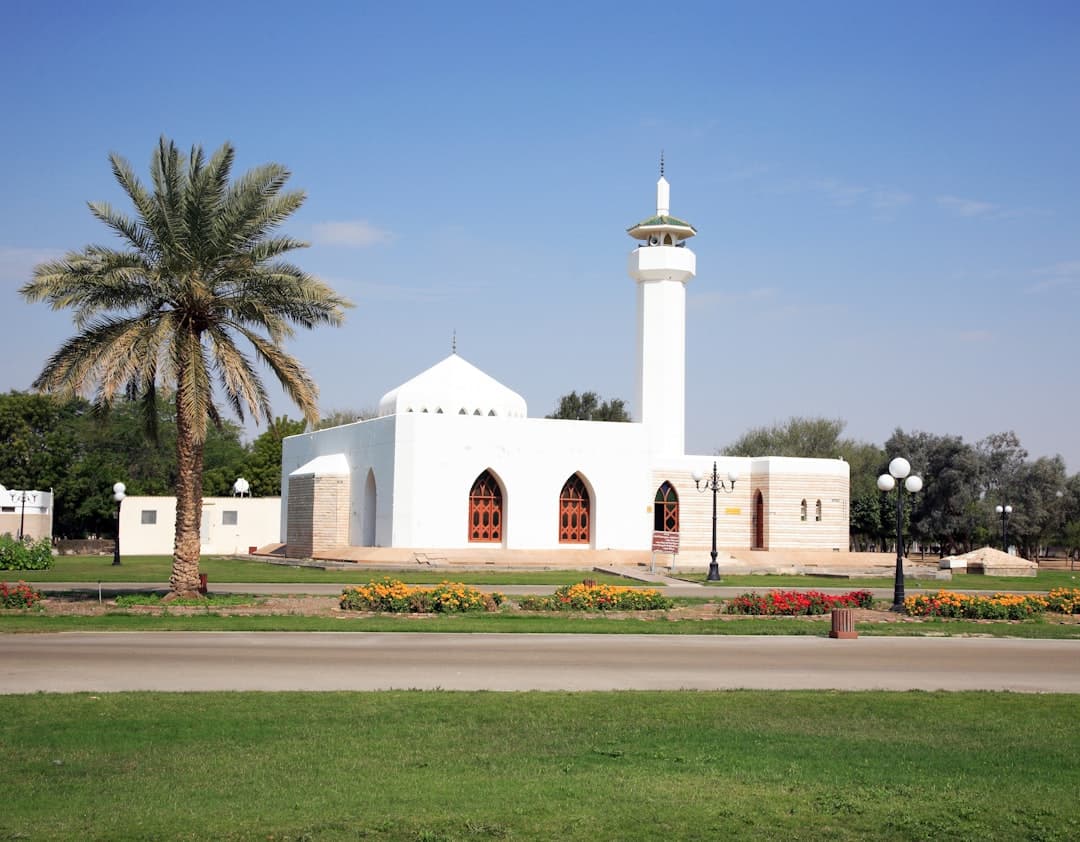
Mleiha, sometimes spelled Maliha in older English transliterations, is a protected archaeological area and a candidate for the UNESCO World Heritage list, with finds that reach back across thousands of years of human history. At its heart is a modern archaeology centre, a well-designed museum that frames the whole site and makes sense of what you are looking at before you head out into the landscape.
Excavations at Mleiha span an extraordinary stretch of time: the oldest finds date back as far as 130,000 years, among the earliest evidence anywhere of early humans moving out of Africa into Arabia, and the record continues through the Bronze and Iron Ages up to a restored pre-Islamic fort that once watched over the surrounding plain. Around the centre lie the remnants of these ancient settlements, burial towers and the fort itself, evidence of the people who lived, traded and were laid to rest here across many eras. A knowledgeable guide turns these scattered stones into a story, explaining how the region was settled, how it connected to the wider ancient world and why archaeologists consider it so significant. It is what lifts Mleiha above pure scenery into something closer to a journey through time. Travelers considering a group-format visit can find a dedicated page for the archaeology centre on gett.travel, with exhibit details and opening hours (typically 09:00 to 19:00, extended to 21:00 on Thursdays and Fridays).
Fossil Rock and a vanished sea
One of Mleiha's most striking sights is Fossil Rock, known locally as Jebel Maleihah, a great weathered outcrop rising from the desert floor. Its name is literal: the rock is studded with the fossils of sea creatures some 80 million years old, sea urchins, ammonites, molluscs and shark teeth among them, left behind when this dry interior lay beneath a warm shallow ocean. To stand in the middle of the desert and touch the imprint of an ancient sea is a quietly extraordinary thing.
The rock is also simply beautiful, a dark, sculptural mass against the pale dunes that draws photographers at every time of day. A short walk around its base, with the guide pointing out the fossils and explaining the geology, makes the deep age of the place tangible in a way no museum panel quite manages.
Into the dunes
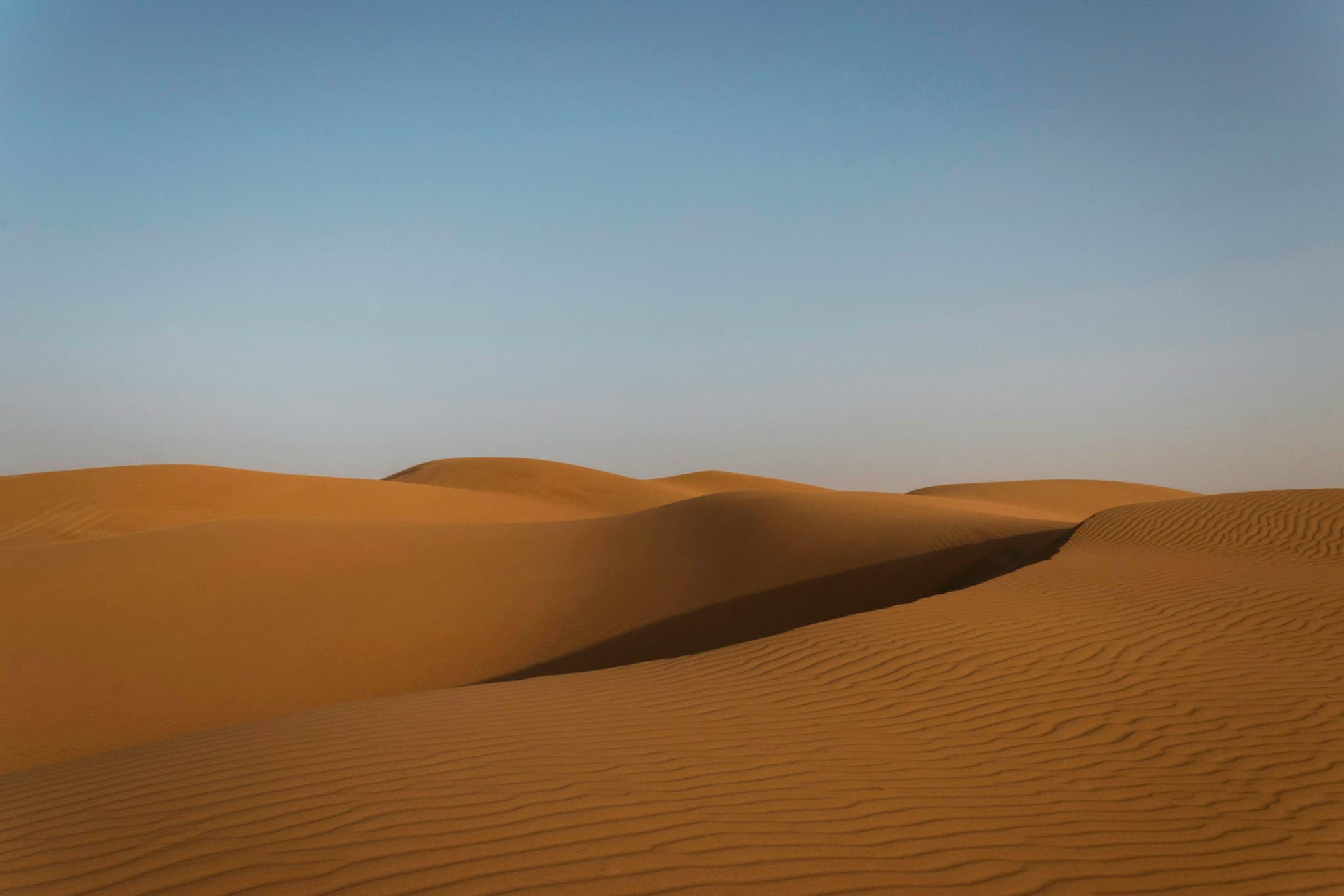
After the archaeology and the fossils, the day turns toward the open desert. A four-wheel-drive takes you off the road and into the dunes, climbing the soft golden slopes toward a high vantage point with long, uninterrupted views across the sand. It is the classic thrill of the desert, the lurch and glide of the vehicle over the crests, but set in a wilder, quieter corner than the busy safari camps closer to the city. You do not need your own 4x4 for any of this: the road to the archaeology centre is paved and reachable in a regular car, and the dune stretch that follows is always driven by the guide's own vehicle rather than a self-drive rental.
Up on the dunes there is space to step out, walk on the ridgelines and take in the scale of the landscape. Because Mleiha draws fewer crowds than the standard Dubai safari belt, the dunes feel genuinely empty, and the silence up there, broken only by the wind, is part of what makes the place memorable. This dune run is the centrepiece of our Mleiha desert archaeology tour, run end to end in the same private vehicle used for the archaeology stops earlier in the day. If you would rather stay closer to the city for a classic evening, our private desert safari covers that format.
- A four-wheel-drive ride from the archaeology centre into high desert dunes
- A wilder, quieter setting than the busy safari camps near Dubai
- Room to walk the ridgelines and take in long, open views
- A guide who reads the terrain and chooses the best vantage points
The Mleiha sunset
The day is built to end at sunset, and Mleiha delivers it well. Sunset time shifts with the season: expect the sun down around 17:30 through December and January, nearer 18:15 to 18:30 during the spring and autumn shoulder months, and as late as 19:15 to 19:30 through June and July. Whatever the date, the vantage point is the same high dune used for the afternoon drive, right beside Fossil Rock, so there is no separate stop to plan for. As the sun drops toward the horizon, the dunes turn from gold to amber to deep rose, and the whole desert seems to glow from within for a few unhurried minutes. With water or tea in hand and the rocks of Fossil Rock silhouetted in the distance, it is a calm, unforced finale rather than a staged show.
This is where the slower pace of Mleiha pays off. There is no rush back to a crowded camp, no scramble for a photo spot; you simply watch the light change, let the temperature soften and enjoy the quiet before the easy drive back to Dubai. For many travellers it is the most peaceful hour of their whole trip.
Staying on for the stars
Once the sun is down, many private groups choose to linger a little longer. Mleiha sits far enough from city lights that the sky darkens properly, and on a clear night the first stars appear within minutes of the colour fading from the dunes. It is not a dedicated astronomy outing, but even a short stay after sunset shows far more sky than anywhere in Dubai or Sharjah city.
Whether it is worth staying depends on timing and season. On a winter afternoon departure, darkness falls quickly once the sun is gone, so lingering for stars adds only twenty or thirty minutes before the drive back. In summer, when sunset comes later and the desert stays warm well into the evening, staying on for the stars feels like a natural extension of the day rather than an extra stop. Either way, mention it to your guide when you book, since it changes how long the dune stop runs.
The best time to visit
As with any desert outing in the Emirates, the season shapes the experience. The cooler months, roughly October to April, are the most comfortable, with mild air that makes walking around the archaeology centre and the dunes a pleasure rather than an endurance test. This is the ideal window for an unhurried day outdoors.
In the hotter months the trip is still very possible, especially on the later start that runs through the afternoon and into the sunset, when the worst of the heat has passed. Whatever the season, an evening visit times your arrival at the dunes for golden light, which is why most travellers favour the afternoon departure that ends with the sun going down. A single afternoon session comfortably covers the archaeology centre, Fossil Rock, the dune drive and the sunset itself in that order, so nothing has to be rushed to beat the dark.
Booking a private Mleiha day
Mleiha can be visited in a group, but a private day suits its slow, layered nature far better. With your own guide and vehicle you can linger over the parts that interest you most, whether that is the archaeology, the fossils or simply the dunes and the sunset, and set the pace around your own group rather than a fixed timetable.
A private arrangement also takes care of the practicalities: comfortable transfer from your hotel in Dubai and back, a guide who speaks your language, the right departure time for the season and the light, and the freedom to pause for photographs whenever the landscape calls for it. Tell us when you are visiting and what draws you to Mleiha, and we will arrange a private day that turns a desert trip into a quiet journey through Arabia's deep past. Our Mleiha desert archaeology tour is built exactly around this kind of day.
An hour inland from Dubai, Mleiha turns a desert day into a journey through Arabia's deep past: ancient settlements and a thoughtful archaeology centre, Fossil Rock holding the imprint of a vanished sea, high golden dunes far from the safari crowds and a quiet sunset to close the day. Slower and more layered than a standard dune trip, it rewards curiosity and an unhurried pace, especially on an afternoon visit that ends with the light turning amber over the sand. Message us on WhatsApp with your dates, and we will arrange a private Mleiha day shaped around what draws you to it.