A desert safari is the experience most travellers picture when they imagine the Emirates beyond its skyline: red dunes rolling to the horizon, a four-wheel drive carving through the sand, and a quiet camp where the evening slows down over dinner and a fire. It is one of the few things in Dubai that feels timeless, a glimpse of the landscape that was here long before the towers. The format ranges from a big shared camp with shows and crowds to a private evening that belongs to your group alone, and the choice shapes the night as much as the dunes do. This guide explains what a desert safari actually involves, when to go, what to bring and how to pick the version that suits you.
What a desert safari really is
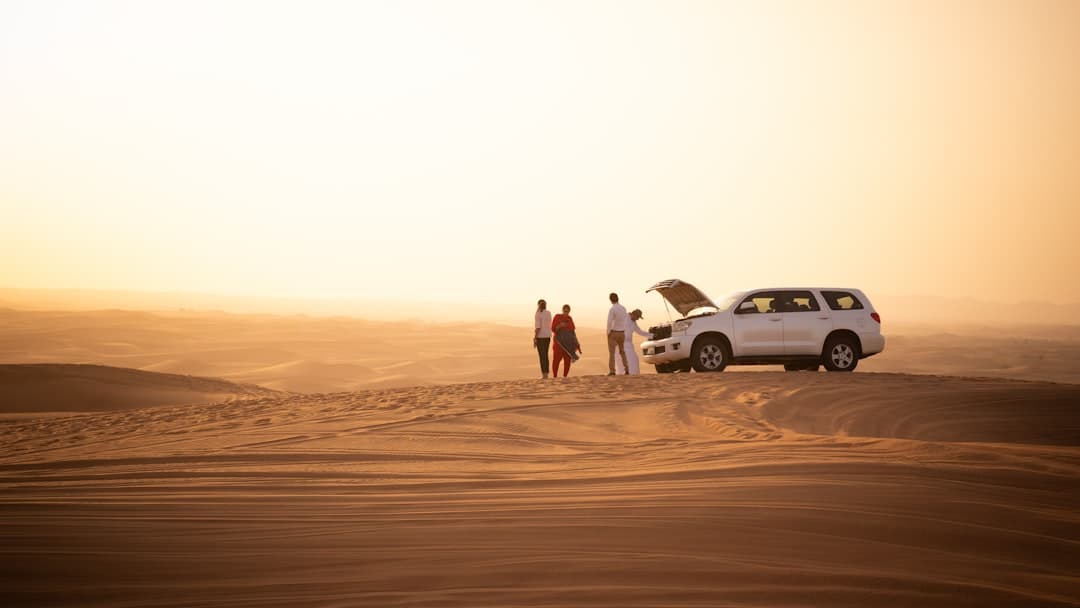
At its heart a desert safari is a half-day trip out of the city into the dunes, usually in the late afternoon so the heat has eased and the light is at its best. You are collected from your hotel in a four-wheel-drive vehicle, driven out to the sand, taken over the dunes, and brought to a camp where dinner is served in the open air before you return after dark. It is part drive, part landscape, part evening under the stars, and the balance between those three is what separates one safari from another.
The classic version wraps the evening around a Bedouin-style camp: a few hours of dune driving and photographs, then camel rides, Arabic coffee, henna and a barbecue dinner, often with live entertainment. Our classic desert safari keeps this shared, lively format. A quieter, more private safari keeps the dunes and the sunset but trades the crowd and the stage shows for space, calm and a camp that is yours. Both start in the same sand; what changes is how the night feels. Readers weighing a shared safari instead can browse the desert safari excursions guide on gett.travel for the wider catalog of options.
Choosing your time: evening, morning or overnight
The evening safari is by far the most popular, and for good reason. Leaving the city in the mid-afternoon, you reach the dunes as the sun begins to drop, catch the best light for dune driving and photographs, watch the sunset from a high ridge, and then settle into the camp for dinner as the desert cools and the stars come out. It is the version that gives you the full arc of the experience in a single evening.
A morning safari is the alternative for those who prefer cooler temperatures, softer light and an earlier finish, with the dunes still crisp from the night and far fewer vehicles around. An overnight safari adds a stay in the desert, swapping the drive home for a night under the sky and a sunrise over the sand. For a first safari the evening run is the natural choice, but if you want quiet over spectacle, the morning has its own appeal. Our morning versus evening safari comparison weighs the two against each other in more depth.
Into the dunes: the drive and dune bashing
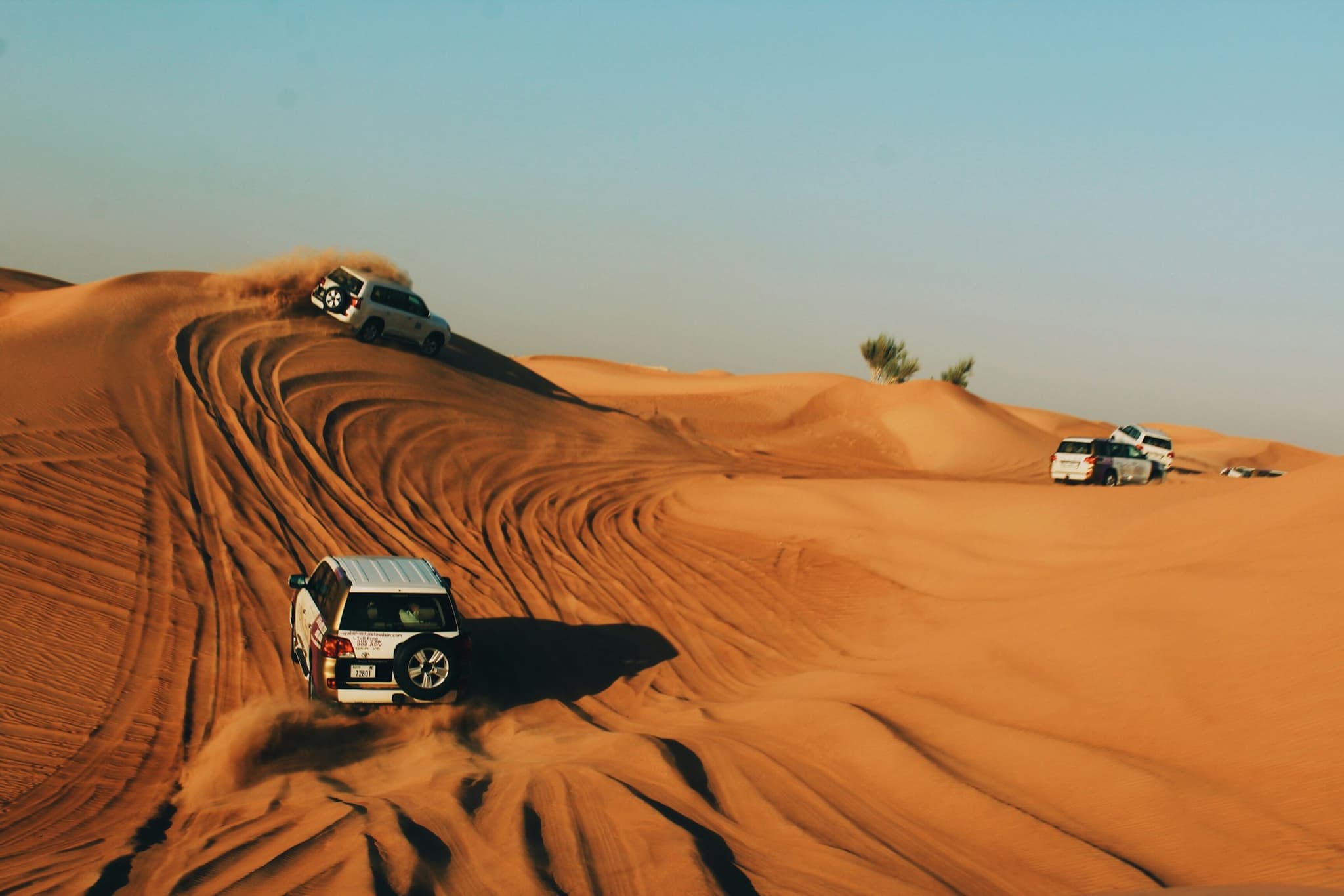
The drive itself is part of the attraction. From most hotels the desert is around forty-five minutes away, and once the tarmac ends the vehicle airs down its tyres and heads onto the sand. Dune bashing, riding the soft crests and slopes of the dunes in a four-wheel drive, is the adrenaline core of the trip: twenty minutes or so of climbs, drops and turns that feel like a rollercoaster written into the landscape. It is exhilarating rather than dangerous when the driver knows the terrain, but it is not for everyone. Much of this driving happens inside the protected Dubai Desert Conservation Reserve, covered in full in our separate guide to the reserve.
If the bouncing is not your thing, it can be kept gentle, and a private safari lets you set that tone in advance, asking for a calmer drive or more time simply stopped among the dunes for photographs. Sandboarding and quad bikes are common add-ons for those who want more, while others are happiest with a slow climb to a high dune to watch the light change. The drive ends, almost always, with a sunset stop where the dunes glow and the cameras come out.
Sunset, the Bedouin camp and dinner under the stars
Sunset in the desert is the moment most people remember. The low sun turns the sand deep orange and throws long shadows across the ridges, and a few minutes on a high dune at that hour is worth the trip on its own. From there the safari moves to the camp, where the evening unwinds: short camel rides, Arabic coffee and dates, henna if you want it, and the slow gathering of dusk over the sand.
Dinner is served in the open air, a barbecue spread eaten under the stars as the temperature drops. A large shared camp adds live entertainment, a fire show, traditional Tanoura spinning and dance, all of it lively and full. A private camp keeps the food and the setting but lets the night stay quiet, the conversation your own and the sky uninterrupted. Either way, the combination of warm food, cool air and an open desert sky is the part of the evening that lingers.
What to bring and how to prepare
The desert is hot by day and surprisingly cool after dark, so the single most useful thing to pack is a light layer for the evening; people are often caught out by how much the temperature falls once the sun is down. Closed shoes are easier than sandals in the sand, and sunglasses and a little sunscreen help for the dune-driving stretch while the sun is still up.
Beyond comfort, a few things are worth knowing before you book:
- Bring a light jacket or wrap, the desert cools quickly after sunset
- Wear closed shoes and clothes you do not mind getting sandy
- Dune bashing is not advised in pregnancy or with back or neck problems
- A camera or phone with space free, the sunset light is the highlight
- Tell your operator about young children or dietary needs in advance
Shared safari or private: which to choose
A shared safari puts you in a vehicle and a camp with other travellers, full of shows, crowds and energy, and for some that buzz is exactly the point.
A private safari makes the desert feel like your own rather than a stop on someone else's tour. Our private desert safari is built exactly around this kind of evening. It sits alongside other formats in our desert safari collection, from a classic evening run to the deep dunes of Liwa.
As of 2026, the top end of the market has also moved further upscale, with some operators offering a falconry display and a chef-led, multi-course desert dinner as part of an ultra-premium package. A private safari can match that level as an add-on: mention falconry or a chef-led dinner when you enquire, and we will confirm what can be arranged as an upgrade to your evening, without changing what the standard evening already includes. If you would rather have falconry and wildlife spotting built into the programme from the start, our private conservation safari keeps both as standard, inside a protected desert reserve rather than the open dune circuit.
At a glance, here's how the two formats compare:
| Shared safari | Private safari | |
|---|---|---|
| Vehicle & camp | Shared with other travellers | Your own vehicle and camp |
| Schedule | Fixed, built around the group | Set at your own pace |
| Atmosphere | Lively, with shows and crowds | Quiet and personal |
| Price tier | Cheaper | Premium |
| Best for | Social travellers who enjoy the buzz | Couples, families, privacy over spectacle |
Making the most of your desert evening
Whichever format you pick, a few habits make the night better: go in the evening for the sunset, build in time to simply stand on a dune rather than rushing camp to camp, and dress for the cool air that follows the heat. Treat the drive as part of the experience rather than just transport, and let the quiet of the desert, which is its rarest quality, actually reach you.
If you would like the dunes and the sunset without the crowds, a private desert safari built around your group is the way to do it. Message us on WhatsApp and we will arrange a private evening in the desert, with hotel pickup, a driver-guide and a pace and camp that suit the people you are travelling with. If you want to go further into the real desert beyond a single evening, see our guide to Liwa and the Empty Quarter.
A Dubai desert safari is the city's most timeless half-day: a drive into the dunes, dune bashing and a sunset that turns the sand to gold, followed by dinner at a camp under the stars. Go in the evening for the full arc of the experience, dress for the cool air after dark, and treat the quiet of the desert as the point rather than the backdrop. A shared safari is the lively, lower-cost option, while a private one gives you the dunes and the sunset without the crowd. Message us on WhatsApp and we will arrange a private desert evening around your group, your pace and the people you are travelling with.