Most first-time visitors arrive in Dubai with a mental picture made of glass towers and gold, and they leave having eaten in hotel restaurants that could be anywhere in the world. That is a shame, because food is one of the most honest ways into this city. Roughly nine in ten residents were born somewhere else, and every one of those communities brought its kitchen with it: the Keralan fish curry, the Iranian saffron rice, the Lebanese grill, the Filipino bakery, the Emirati slow-cooked rice and meat that started it all. The result is a food map that runs from a thumb-sized dumpling in a Deira lane to a tasting menu eighty floors up, and the joy of it is how cheaply and quickly you can cross between those worlds. This guide is about the parts of that map worth walking, what genuine Emirati food tastes like and where to find it, the old market quarter where the city still smells of cardamom and grilled hammour, and why exploring all of it privately, with someone who knows which stall is worth the queue, turns a meal into one of the best days you will spend here.
A city you can eat your way through
There is no single Dubai cuisine, and that is exactly the point. The Emirates were a small fishing and pearling society until two generations ago, so the indigenous table is built on what the desert and the Gulf could give: dates, camel and goat, rice carried in by dhow, fish, and a handful of warming spices traded across the water from India and Persia. Onto that foundation the last fifty years have layered the food of everyone who came to build the place, and they came in their millions. Walk a single block of older Dubai and you can pass a South Indian thali house, a Pakistani charcoal grill, an Iranian bakery pulling flat bread out of a clay oven, and an Emirati majlis serving coffee scented with cardamom.
For a traveller this is liberating rather than confusing. You do not need a reservation or a dress code to eat extremely well. The best single plate of your trip might cost less than a coffee at the hotel, and the most memorable hour might be spent standing at a counter watching a cook you cannot speak a word to. The skill is simply knowing where to point yourself, because the genuinely good places rarely advertise and almost never sit on the tourist track.
Emirati food, and where to actually find it
The first surprise is that real Emirati cooking is hard to stumble on by accident. For years it was something families ate at home rather than sold in restaurants, so the visitor version was thin. That has changed: a clutch of dedicated Emirati kitchens and cultural houses now serve the proper dishes, and a good guide will steer you to the ones that cook the way a grandmother would rather than the way a hotel thinks tourists want, and if halal dining also shapes your trip, our Muslim-friendly Dubai guide goes deeper on where and how to eat.
These are the plates worth seeking out, the backbone of an Emirati meal from the savoury heart to the sweet finish:
- Machboos — the national dish: spiced rice slow-cooked with chicken, lamb or fish, layered with dried lime, cardamom and saffron, somewhere between an Indian biryani and a Persian pilaf but entirely its own thing.
- Harees — wheat and meat pounded for hours into a smooth, comforting porridge, plain and deeply savoury, the dish that appears at every Ramadan table and wedding.
- Luqaimat — warm little dough balls fried crisp and soaked in date syrup and sesame, the sweet everyone remembers, best eaten the moment they leave the oil.
- Balaleet — sweet vermicelli with saffron, cardamom and rosewater served under a thin omelette, the classic Emirati breakfast that plays sugar against egg.
- Arabic coffee and dates — gahwa poured from a long-spouted dallah, light and cardamom-bright, served with dates and offered as the first gesture of hospitality everywhere you go.
Old Deira: where the city still smells of spice
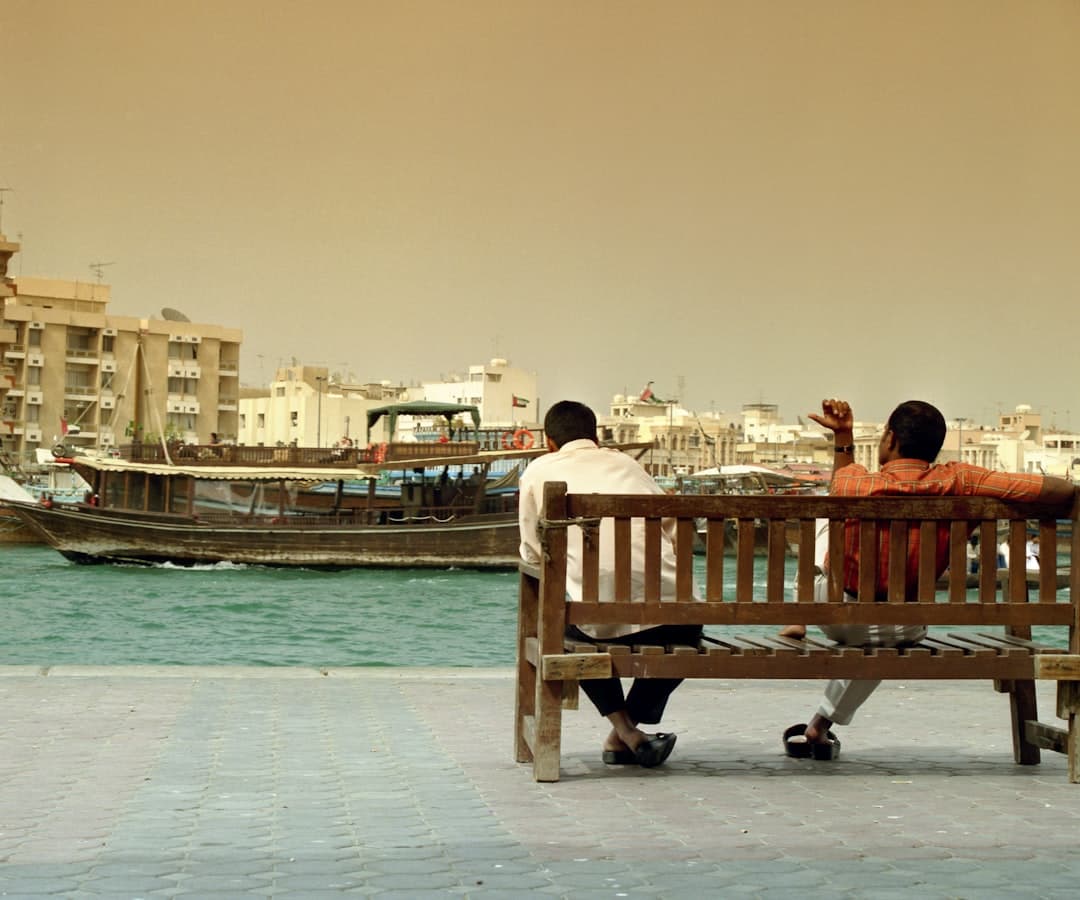
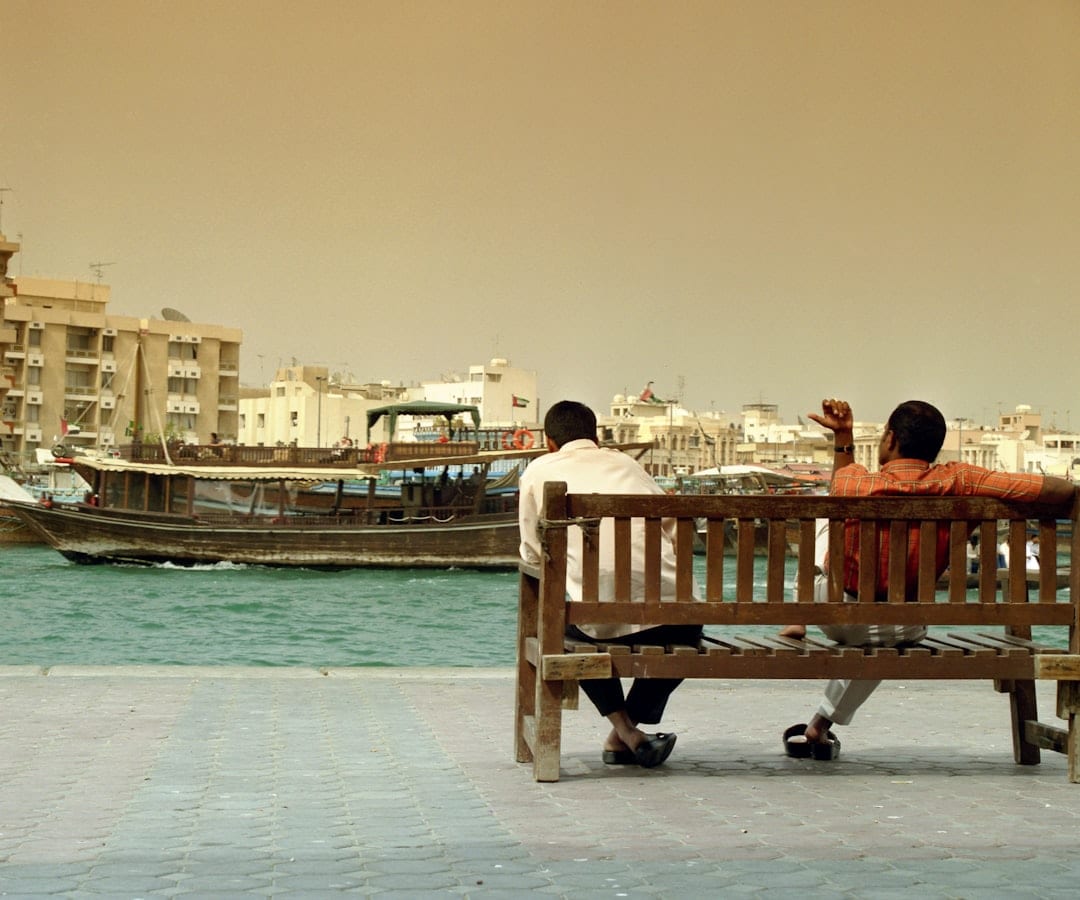
If you eat in only one part of Dubai, make it Deira, the old trading quarter on the northern bank of the Creek. This is where the city began, where the dhows still tie up loaded with goods from Iran and East Africa, and where the food is at its most rooted. The spice souk is the obvious first stop: narrow covered lanes where open sacks spill saffron, dried lime, sumac, frankincense and a dozen blends of baharat, and where the air is thick enough to taste. It is touristed, yes, but it is also real, and a vendor who sees you are serious will let you smell and taste your way along the row.
A short walk away sits the thing most visitors never see: the Deira fish market, busiest in the early morning, where the night's catch from the Gulf is laid out on ice in glittering rows. Hammour, kingfish, prawns, blue crab and small silvery sardines change hands by the crate, and at some markets you can buy a fish and carry it to a kitchen that will grill it for you on the spot. Add the gold souk a few lanes over, the dried-fruit and nut stalls, and the coffee houses where old traders still gather, and you have a sensory afternoon that the modern city, for all its towers, cannot match.
The neighbourhoods that feed Dubai
Beyond Deira, Dubai's real eating happens in a handful of dense, unglamorous neighbourhoods that most tour itineraries skip entirely. Al Karama is the classic: a grid of low buildings packed with South Indian dosa houses, Pakistani kebab counters and Filipino canteens, the kind of place where lunch is fast, generous and almost free. Al Satwa does the same job with a Levantine and Iranian accent, its pavements lined with shawarma stands and bakeries. Al Rigga and the streets around it stay awake late, the tables spilling onto the pavement as families eat well past midnight.
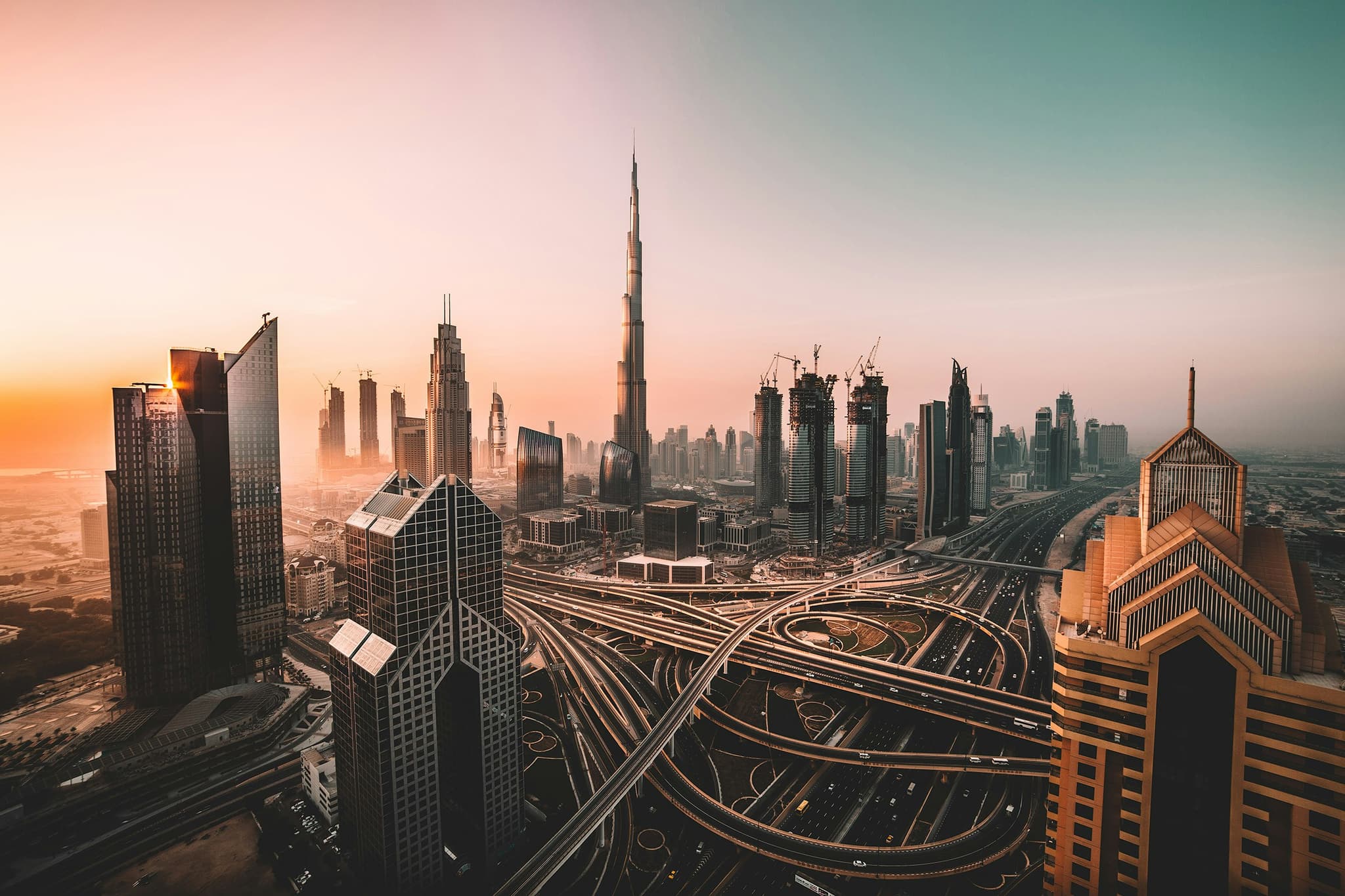
At the other end of the scale, Dubai is now a genuine fine-dining city, with chefs' tables, Michelin recognition and dining rooms perched at the top of its tallest towers. The trick, and the thing a good food day gets right, is not choosing one register over the other but moving between them: a saffron-bright breakfast in an Emirati house, a midday plate eaten standing in Karama, an evening of grilled fish by the Creek or a tasting menu above the skyline. The contrast is the experience.
Eating with a guide who knows the back streets
Food is the part of travel where a guide earns their place most clearly, because the gap between a good meal and a forgettable one in Dubai is almost entirely local knowledge. Which spice vendor is honest, which grill is worth the wait, how to order Emirati dishes that are not on the English menu, when the fish market is at its best, how to navigate a souk without being steered into the most expensive shop — none of this is in a guidebook, and all of it changes a day completely.
A private food day also moves at your pace and your appetite. There is no fixed group menu and no bus to catch: if you want to linger over coffee in a majlis, you linger; if a stall smells irresistible, you stop. A guide handles the language, the bargaining and the logistics, while you do the only job that matters, which is eating. For families, for travellers with dietary needs, or for anyone who wants to go deeper than a hotel buffet, that quiet expertise is the difference between seeing Dubai's food and actually tasting it.
How to plan a food day in Dubai
The single best decision is to come hungry and go early. Deira and its markets are at their best in the cool of the morning, before the heat builds and while the fish is freshest, so a food day that starts with breakfast and works through the old quarter beats one that begins at lunch. Pace yourself in small plates rather than full meals — the pleasure here is range, not volume — and leave room, because the temptation to keep tasting never really stops.
Dress for walking and for modesty in the markets, carry water, and remember that the most rewarding hours are often the least planned ones. From October to April the weather makes a long food walk a pleasure; in high summer the same route works best split between early morning and the cooler evening, with the midday heat spent indoors over a long lunch. However you shape it, treat the food not as a thing you do between sights but as the sight itself. In Dubai it rewards exactly that kind of attention. Those weighing a group tour instead can browse the Dubai food and culture guide on gett.travel.
Dubai feeds two hundred nationalities, and its truest character is on a plate rather than in a skyline. Eat through Deira's spice lanes and fish stalls, seek out genuine Emirati cooking, cross between a counter in Karama and a table above the towers, and do it privately with someone who knows the back streets — and you will leave knowing the city in a way no view ever teaches.