Almost everyone who comes to the Emirates stays in Dubai and Abu Dhabi, and almost everyone misses the half of the country that moves at a different speed. North of the big cities lie five smaller emirates, each with its own character, strung along the Gulf coast and reaching back over the Hajar mountains to the Indian Ocean. On their own none is a headline destination, but threaded together they make a road trip with more variety than any single city can offer: cultural museums and old souqs, a tidal lagoon full of flamingos, the country's highest mountain and a long stretch of east coast where the desert finally meets the sea. The distances are short and the driving easy, which is the whole appeal, and the only thing that really matters is the order you take it in. This itinerary runs the loop the way it flows best, from Sharjah up the coast to Ras Al Khaimah and over the mountains to Fujairah, and shows how to do it as one full day or, better, an unhurried two.
Want a day-by-day Northern Emirates road trip route too? See it on gett.travel.
The road north, in the right order
The northern emirates sit in a rough arc above Dubai. Four of them, Sharjah, Ajman, Umm Al Quwain and Ras Al Khaimah, follow the Gulf coast one after another as you drive north, so they line up naturally into a single ribbon of a route. The fifth, Fujairah, sits on the far side of the Hajar mountains on the Indian Ocean, reached by a spectacular road that cuts straight through the range. Put together, the loop covers a surprising range of country for so little driving. For where these five sit within the whole federation, see our overview of the seven emirates of the UAE.
Order is what makes it work. Run the coast first, picking up culture, harbours and lagoons as the towns grow quieter and smaller, then climb to the mountains of Ras Al Khaimah before crossing east to Fujairah and the sea. Done that way each stop feels like a step further from the city, and the trip builds from museums and souqs to wild lagoons, high peaks and an empty coast. The total driving is modest, easily split across a day or two, which leaves the time where it belongs, on the ground.
- Sharjah, the cultural capital, for its museums, souqs and heritage quarter
- Ajman, the smallest emirate, for its corniche, dhow yard and quiet beach
- Umm Al Quwain, the calmest of all, for the Khor Al Beidah lagoon and its birds
- Ras Al Khaimah, for Jebel Jais, the highest mountain in the country
- Fujairah and the east coast, for the Hajar mountains and the Indian Ocean
- A loop of only two to three hours' driving in total, easily split over one or two days
Sharjah: the cultural first stop
The drive north begins barely twenty minutes from Dubai in Sharjah, the third largest emirate and the cultural heart of the country. Once a major pearling and trading port, it has poured its energy into heritage rather than skylines, and it holds the richest concentration of museums in the Emirates. The restored Heart of Sharjah quarter, a maze of coral-walled houses and shaded lanes around the old creek, is the place to start, with the Islamic civilisation museum and the art museum nearby and the covered souqs close at hand.
It makes the ideal opening because it sets the tone for everything that follows: this is the old, slower Arabia that the rest of the route keeps revealing. An hour or two among the courtyards, the calligraphy and the spice stalls is enough to feel the shift away from the glass towers before you carry on up the coast, and it grounds the whole trip in the culture that the northern emirates have held onto.
Ajman: the smallest emirate
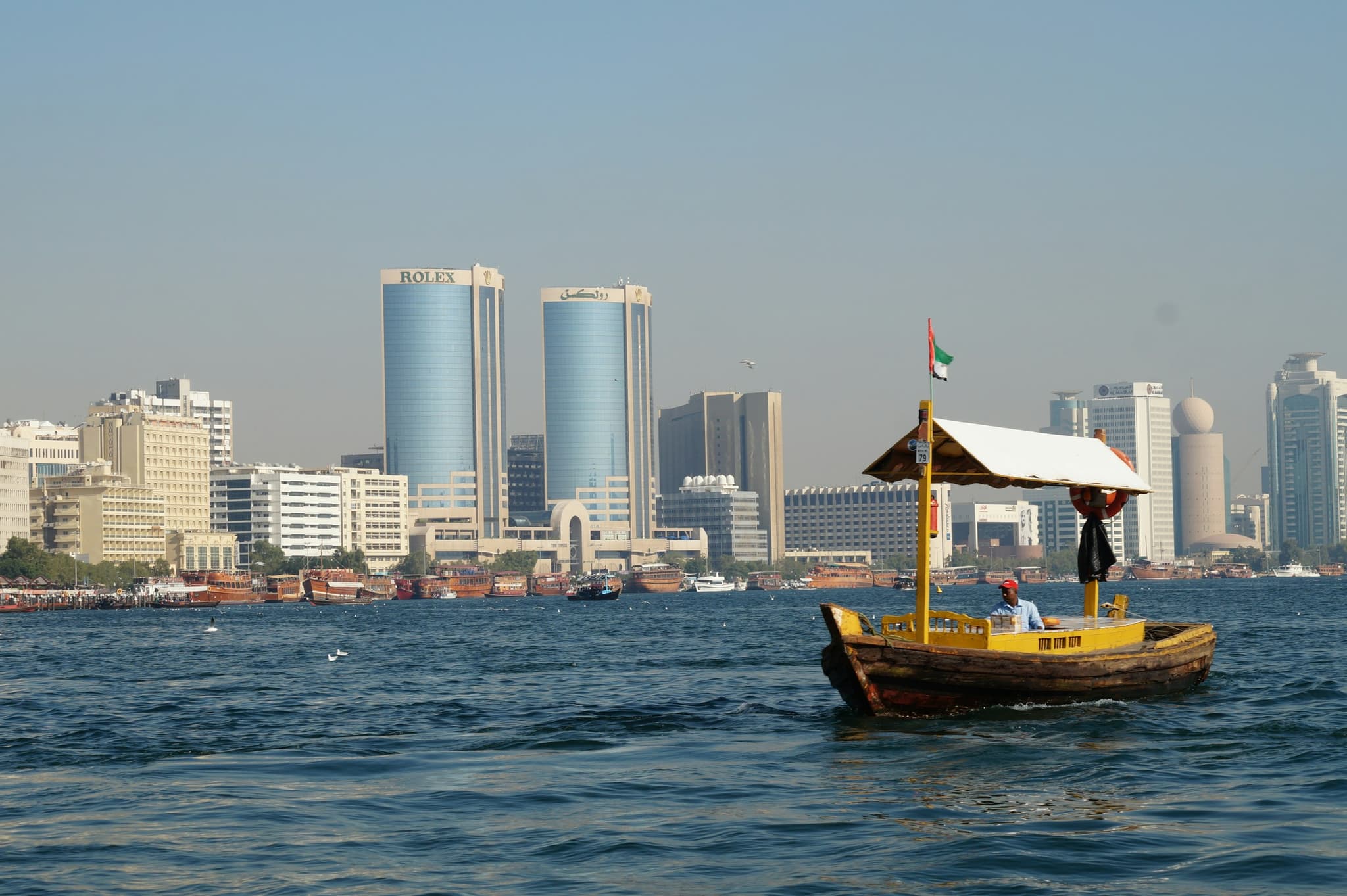
A few minutes further north the road slips into Ajman, the smallest of the seven and so compact that its border with Sharjah is almost invisible. For all its size it has one of the most relaxed corniches on the coast, a clean curve of beach and promenade looking out over the Gulf, and behind it a creek where a working dhow yard still builds wooden boats by hand much as it has for generations.
Ajman rewards a short, easy stop rather than a long one. The heritage fort, now the emirate's museum, sits in the old quarter and tells the story of pearling and coastal life, and the seafront is made for a slow walk and a coffee with the boats in view. It is the gentlest of the stops, a quiet beach town that asks nothing of you, and a natural breather between cultural Sharjah and the lagoons that come next.
Umm Al Quwain: lagoons and birds
Past Ajman the towns thin out and Umm Al Quwain begins, the least populous and quietest of all the emirates. This is where the road trip leaves the city behind for good. The land flattens into a low peninsula edged by water, and the draw here is nature: Khor Al Beidah, a broad tidal lagoon of mangroves and sandflats that is one of the most important bird habitats in the country, with flamingos, herons and clouds of migratory waders in the cooler months.
There is also history hidden offshore. Siniyah Island, which shelters the lagoon, recently gave up the remains of an ancient Christian monastery, among the oldest known in the Gulf, while the old town keeps its coral houses, a historic fort and a working fishing harbour. It is the calmest link in the chain, a place to slow right down, watch the birds and feel how the Emirates were before the boom, before the route turns toward the mountains.
Ras Al Khaimah and Jebel Jais
The northernmost emirate, Ras Al Khaimah, is where the landscape finally changes shape. Behind its coast of beaches and old pearling villages the Hajar mountains rise hard and bare, and a smooth modern road climbs them to Jebel Jais, the highest peak in the United Arab Emirates. The drive up is the highlight in itself, a series of switchbacks with the desert plain falling away below and viewing terraces near the summit where the air turns noticeably cooler.
At the top there is more than the view. Jebel Jais holds the world's longest zip line for those who want it, along with mountain trails and a couple of dramatic places to eat, while down on the plain the emirate offers hot springs, a historic pearl-farming heritage and miles of quiet shoreline. Ras Al Khaimah is the natural place to break a two-day version of the trip, spending the night so the mountains can be enjoyed without a rush before the crossing east.
Over the mountains to Fujairah
The final leg is the most dramatic. From the northern coast a road cuts east straight through the Hajar mountains, winding past bare ochre peaks, palm-filled wadis and old stone villages, and delivers you to the far side of the country at Fujairah, the only emirate that lies wholly on the Indian Ocean. The change is complete: the Gulf, the lagoons and the desert are behind you, and ahead is a green-fringed coast of mountains running down to a different sea.
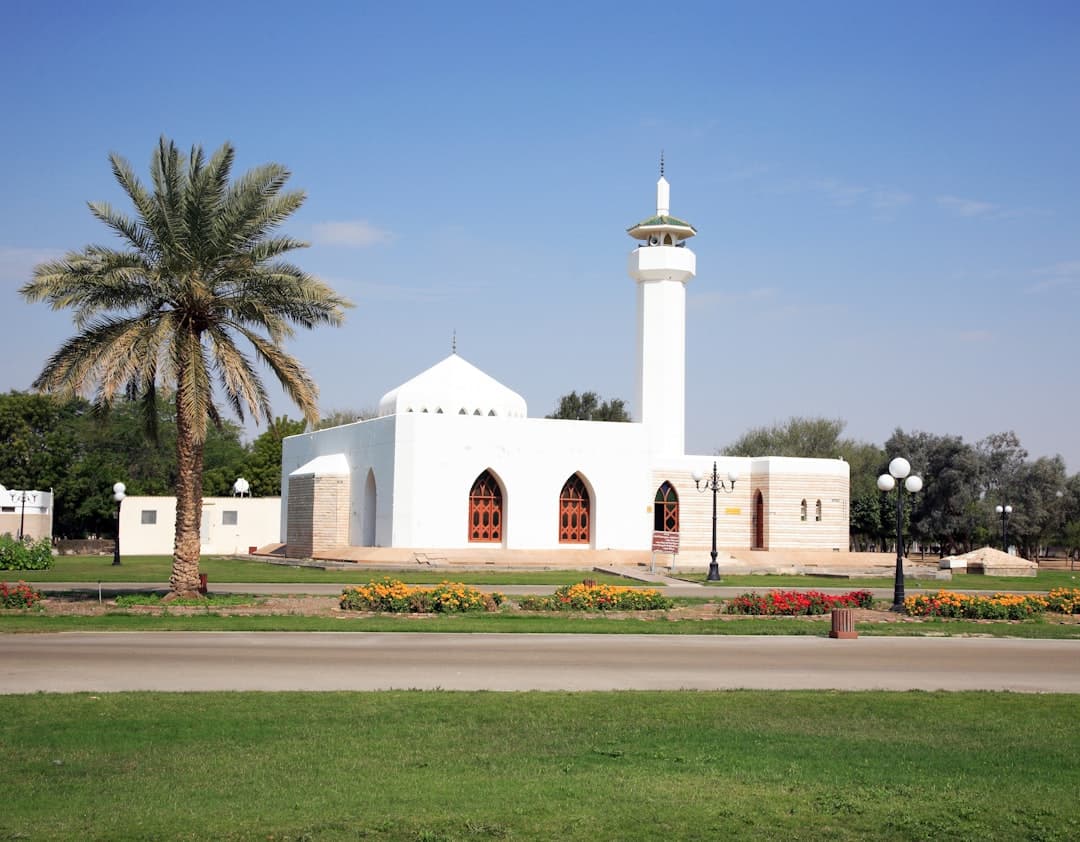
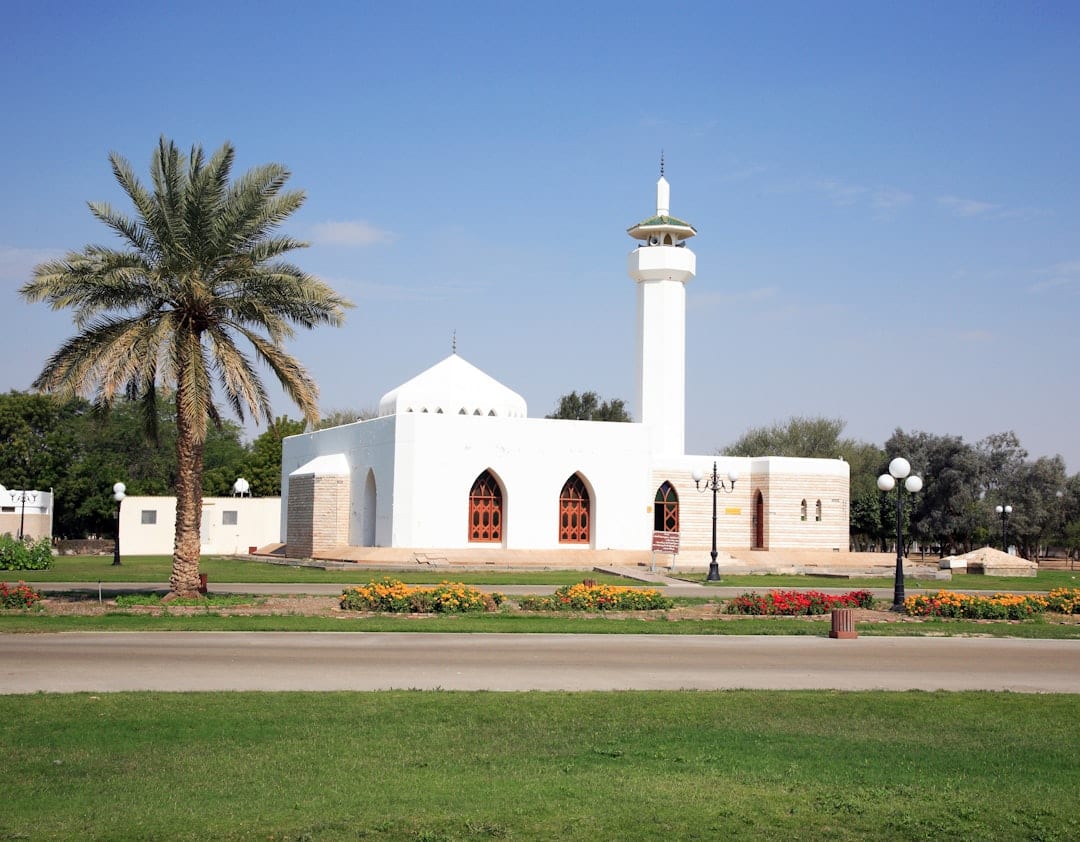
Fujairah rewards the crossing. The Friday Market strings along the mountain road with its fruit, pottery and carpets, and the coast holds the small whitewashed Al Bidyah mosque, the oldest in the country, along with Fujairah's own fort and the diving and snorkelling waters around Snoopy Island. The beaches here are quieter and the water cooler and clearer than on the Gulf side, and reaching them by the mountain road makes the perfect end to the loop before the easy run back to Dubai.
For a full day built entirely around Fujairah's fort, mosque and coves, see the private Fujairah east coast itinerary.
How to drive the north privately
The northern emirates are spread out and only loosely served by public transport, so the comfortable way to link them is a private day with your own guide and vehicle. A single long day from Dubai, roughly nine hours door to door, is enough to take in the headlines: Sharjah's heritage quarter, a pause on the Ajman corniche, the Umm Al Quwain lagoon and a drive up Jebel Jais, with the east coast saved for another time. It is a full day, but the driving between stops is short and the variety keeps it from ever dragging.
To do the whole loop justice, including the crossing to Fujairah and the Indian Ocean, two days is far better, with a night in the mountains of Ras Al Khaimah breaking the route in the middle. Either way a private trip lets you set the balance, more culture or more nature, more mountains or more coast, and skip the stops that do not appeal. Tell us how long you have and what pulls you north, and we will shape a private road trip through the quieter half of the Emirates around exactly that. Each stop along the loop is also bookable on its own through our northern emirates private tours collection. Travelers comparing a group tour can consult the northern emirates road-trip guide on gett.travel.
The five northern emirates are the half of the country most visitors never reach, and threaded together they make one of its best drives: Sharjah for culture, Ajman for its quiet corniche, Umm Al Quwain for the lagoon and its birds, Ras Al Khaimah for the heights of Jebel Jais, and Fujairah for the Hajar mountains and the Indian Ocean. The distances are short and the variety is wide, from old souqs to flamingos to the highest peak in the country, and the order is everything: run the coast, climb the mountains, then cross to the sea. One long day covers the highlights and two unhurried days do the whole loop justice, with a night in the mountains in between. Message us on WhatsApp with your dates and what pulls you north, and we will shape a private road trip through the quieter Emirates around you.