Dubai Mall and Mall of the Emirates dominate the UAE's luxury retail conversation, but The Galleria and Yas Mall in Abu Dhabi carry many of the same brand names with shorter queues, a calmer pace and, at Yas Mall, easily the most to keep kids busy while adults shop. The two Dubai malls edge ahead on sheer size and on stock depth during peak sale season, the two Abu Dhabi malls edge ahead on comfort and family logistics, and the right pick usually comes down to which of those things matters more on the day. Ask ten visitors which emirate is better for shopping overall and most will say Dubai without pausing to think, and in a narrow sense they are right: nowhere else in the region packs so many international houses under one roof. But that answer skips over what Abu Dhabi actually offers, its own souks trading independently of Dubai's louder market, and a pace that suits a traveller who wants to browse rather than be swept along.
Two shopping cities, two different instincts
Dubai's shopping identity is built around scale and spectacle. Its malls are attractions in their own right, with an aquarium, an ice rink or an indoor ski slope sitting a few steps from the shopfronts, and the sheer density of international luxury houses in a single building is genuinely hard to match anywhere else. Shopping here is often the main event of the day, not a stop between other plans.
Abu Dhabi's shopping scene runs on a quieter instinct. Its malls are built primarily for the people who live there, so the pace is calmer and the crowds thinner, and its own souks trade gold, spices and everyday goods without performing for a tourist audience the way parts of Dubai's markets now do. Neither approach is better in the abstract, the two emirates are close enough by road that many travellers sample both in a single trip rather than choosing one over the other.
Dubai's malls and the world's luxury brands
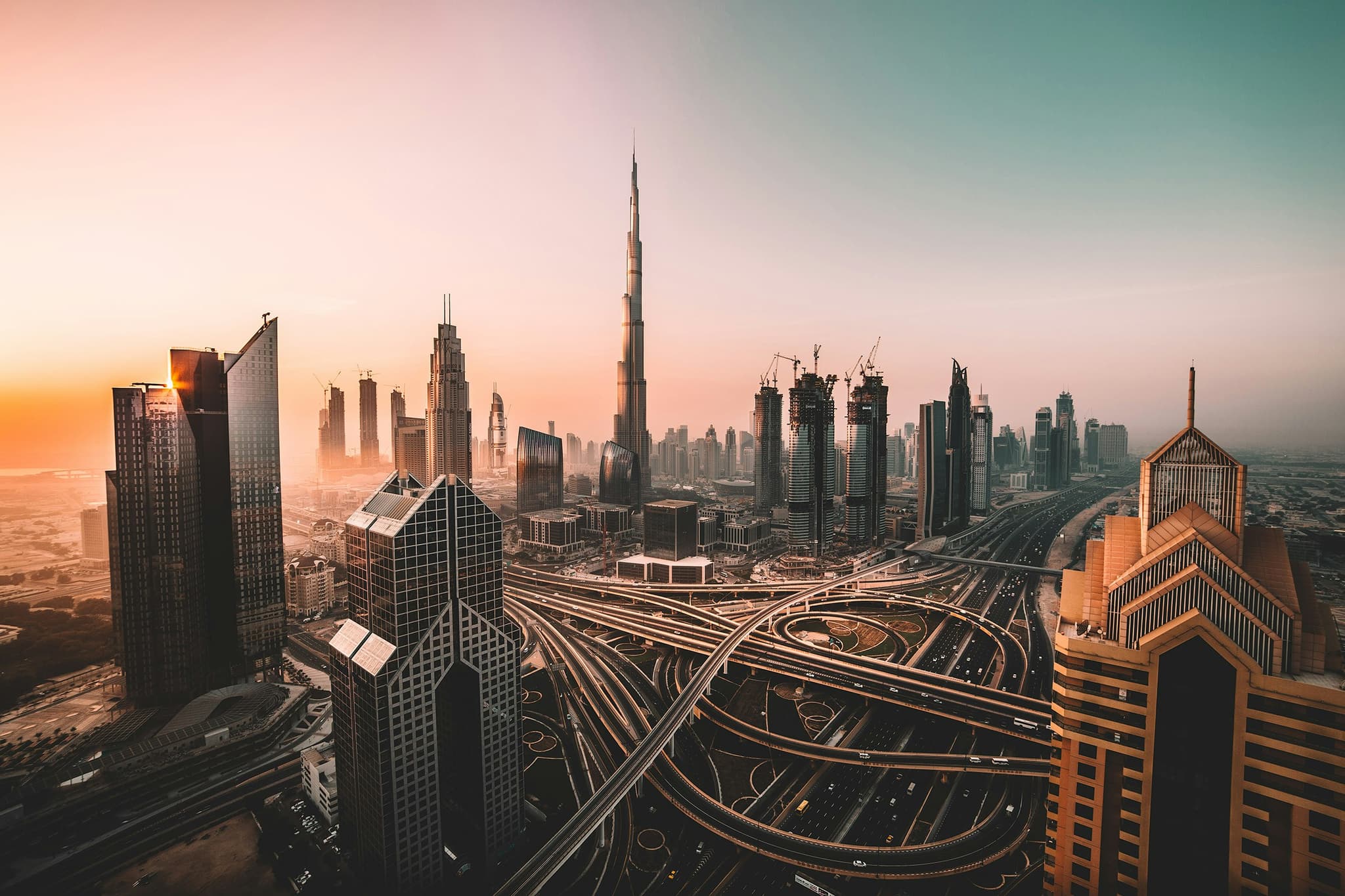
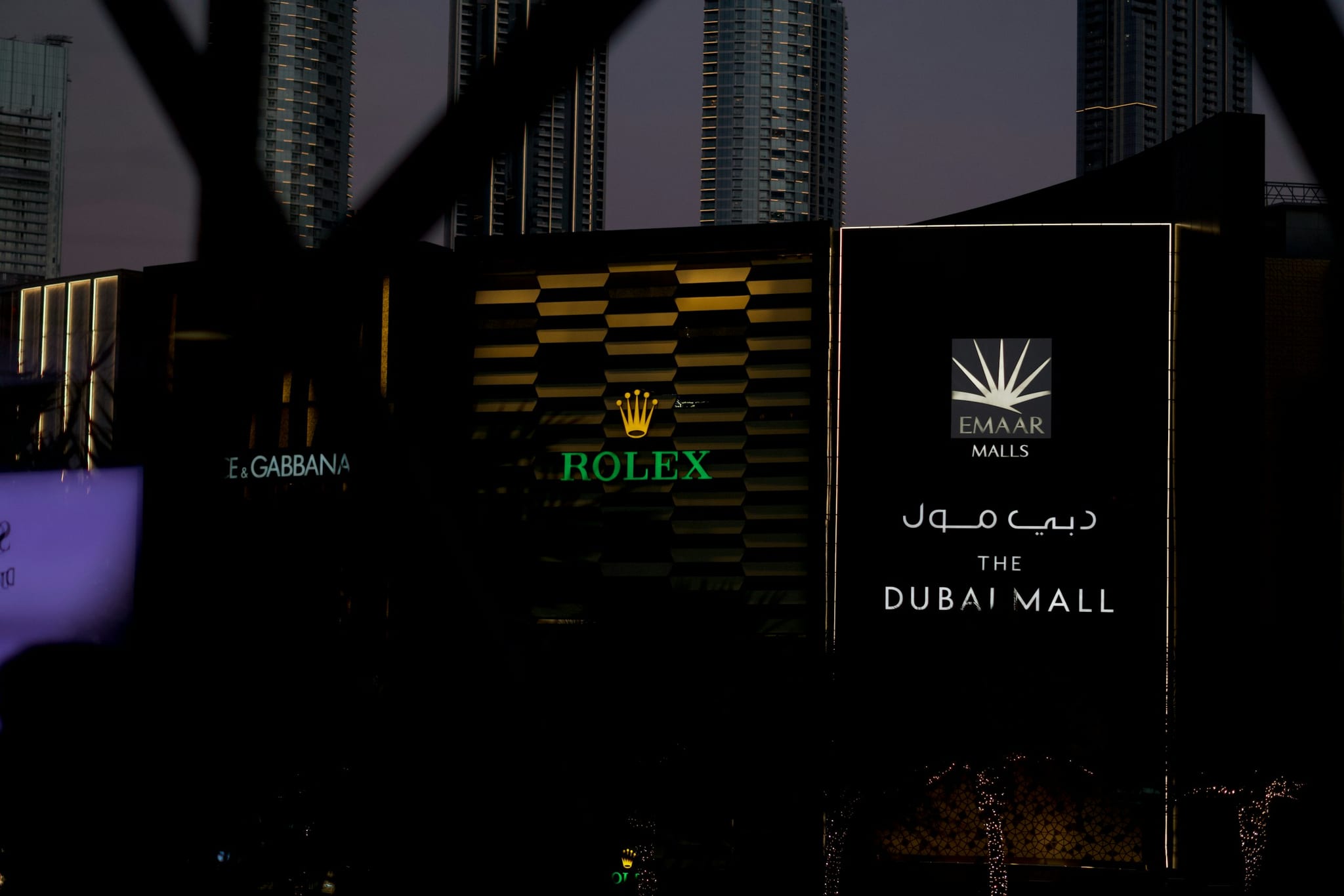
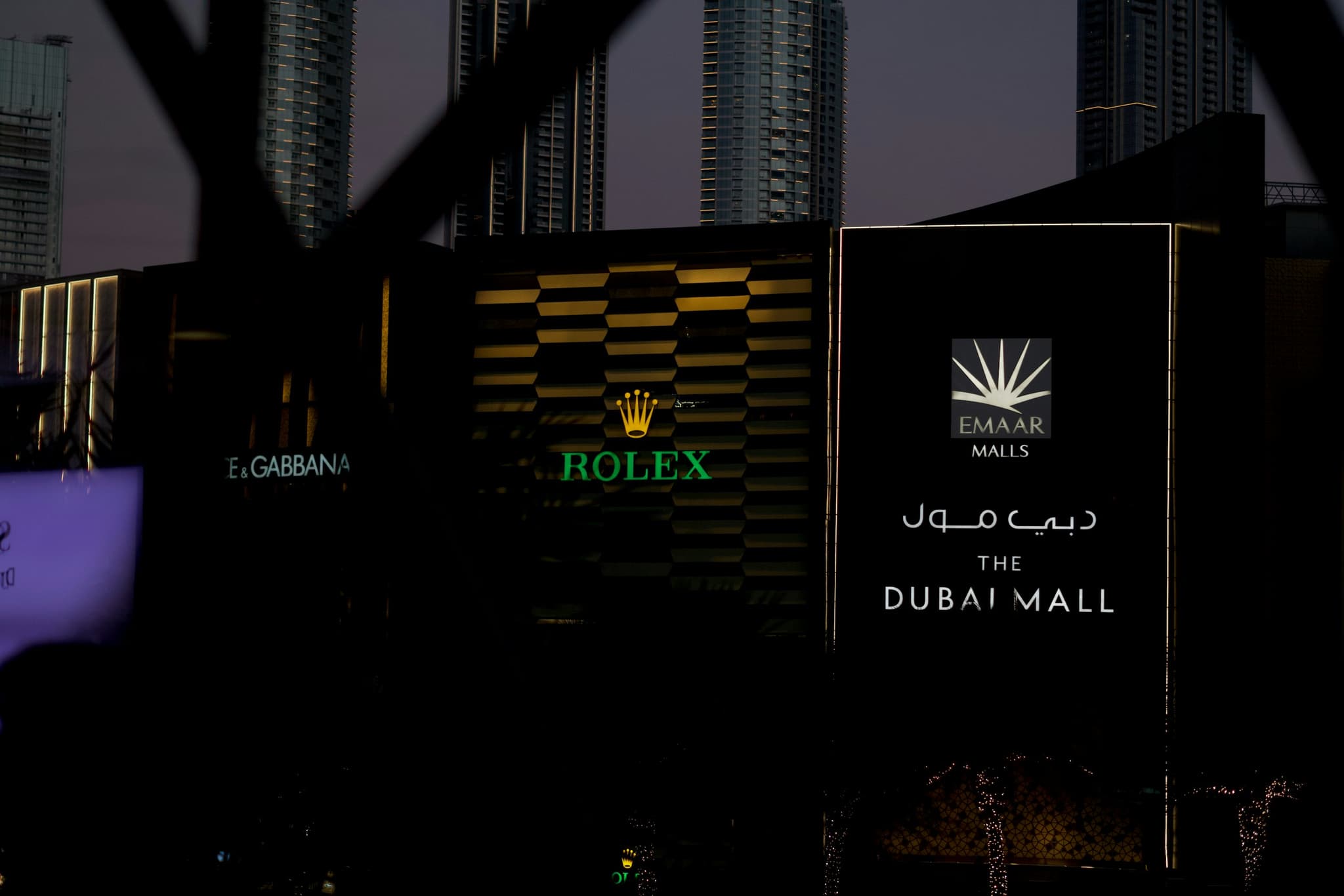
The Dubai Mall, sitting beside the Burj Khalifa, is the obvious starting point: an enormous complex housing seemingly every major international fashion house door to door, wrapped around an aquarium, an ice rink and a fountain show that turns shopping into something closer to a day out. It is less a mall than a small city built around brand names, and treating it as a single afternoon stop rarely does it justice.
Mall of the Emirates plays a similar role with its own signature, an indoor ski slope tucked behind a nearly identical roster of international and luxury labels, while outlet malls further out of the centre carry the same brand names at reduced, last-season prices for shoppers who care less about the spectacle and more about value. Across all of them, the building itself is treated as part of the draw, not just a container for the shops inside.
Dubai's traditional souks vs Abu Dhabi's own markets
Across the creek from Dubai's malls, the older city trades the way it always has. The Gold Souk in Deira lines narrow lanes with shopfronts of jewellery priced against the day's gold rate rather than a fixed tag, the Spice Souk a short walk away sells saffron, cardamom and dried limes from open sacks, and the Textile Souk on the Bur Dubai side cuts fabric to order, the two banks linked by a short abra crossing that is part of the experience itself.
Abu Dhabi runs its own version of this, quieter and far less built for tourists. The World Trade Center Souk reworks the old wind-tower market layout into a contemporary building, the Madinat Zayed Gold and Jewellery Centre follows the same negotiable, rate-linked pricing as Dubai's Gold Souk, and the Mina Zayed area still carries a working traditional and fish market where the trading is genuinely local rather than staged. None of it is a lesser copy of Dubai, it is simply less performative.
Abu Dhabi's malls: calmer, but no less international
Abu Dhabi's malls hold their own against Dubai's brand rosters without matching its crowd intensity. Yas Mall sits on Yas Island alongside the emirate's theme parks and racetrack, The Galleria on Al Maryah Island carries an international and luxury lineup that rivals what Dubai Mall offers, and Marina Mall along the Corniche pairs its shops with sea views that Dubai's inland malls simply do not have.
The difference is felt in the walking, not the brand list: thinner crowds, shorter waits at fitting rooms and tills, and a browsing pace that suits someone who wants the same names without Dubai's density of foot traffic. For a traveller based in or day-tripping to Abu Dhabi, these malls remove any real need to detour back to Dubai purely for brand shopping.
Luxury malls, mall by mall: Dubai vs Abu Dhabi compared
Brand names are the one thing that barely separates the two cities, since most international luxury houses set the same price at every UAE store, so a bag or a watch costs the same walking distance from the Burj Khalifa as it does on Al Maryah Island. What actually changes mall to mall is depth of stock, wait times, and how quickly a new season's collection lands.
The practical difference for a shopper is availability rather than price. Dubai's malls, backed by far higher footfall, tend to carry a fuller size run and see limited pieces move through faster, while Abu Dhabi's luxury floors can sit a step behind on the newest arrivals but reward anyone shopping the exact same brand list without Dubai's crowds.
- Dubai Mall (Downtown Dubai): the deepest luxury roster in the country on its dedicated Fashion Avenue wing, plus the Burj Khalifa and Dubai Fountain outside; stock runs deepest during the Dubai Shopping Festival and Dubai Summer Surprises sale windows, and the aquarium and ice rink give kids a reason to stay while adults browse, though expect queues at flagship doors during peak hours
- Mall of the Emirates (Al Barsha, Dubai): the same luxury tier as Dubai Mall, built around Ski Dubai rather than a fountain show, so families can drop kids at the snow park while adults shop; follows the same citywide sale calendar as Dubai Mall and is a little easier to move through on a weekday
- City Walk (Al Wasl, Dubai): an open-air boutique and lifestyle mall rather than a flagship megamall, roughly 300 stores mixing contemporary and mid-luxury labels, art installations and street-level cafes; suits a slower browsing pace than Dubai Mall's density, and doubles as an evening dining and entertainment stop
- The Galleria (Al Maryah Island, Abu Dhabi): Abu Dhabi's closest match to Dubai Mall's luxury density, the same major houses with noticeably shorter waits, though its kids' entertainment options are thinner, better suited to an adult-focused shopping day
- Yas Mall (Yas Island, Abu Dhabi): a broader mainstream and family brand mix than The Galleria, and the most kid-friendly of the four by a wide margin thanks to its position next to Yas Island's theme parks; sale timing tracks Abu Dhabi's own retail calendar rather than Dubai's festival dates
- Marina Mall (Corniche, Abu Dhabi): mid-range and international brands with Corniche sea views neither Dubai mall can offer
| Mall | Scale | VIP / personal shopping | Hours | Parking | Best for |
|---|---|---|---|---|---|
| Dubai Mall | 1,200+ stores, dedicated Fashion Avenue luxury wing | Fashion Avenue Concierge personal shopping | 10:00–22:00 Sun–Wed, 10:00–midnight Thu–Sat | Free multi-storey and valet | One full day of flagship luxury with kids' attractions on site |
| Mall of the Emirates | 630+ stores, same luxury tier as Dubai Mall | Personal shopping service on request | 10:00–22:00 Sun–Wed, 10:00–midnight Thu–Sat | Free multi-storey and valet | Same brand list as Dubai Mall with Ski Dubai to occupy kids |
| City Walk | 300+ open-air boutique and lifestyle stores | Concierge desk, no dedicated VIP suite | 10:00–22:00, later Thu–Sat | Free multi-storey and street parking | Slower browsing, boutique and lifestyle brands over flagship luxury |
| The Galleria | 400+ stores, Abu Dhabi's closest match to Dubai Mall's luxury density | VIP lounge and personal shopping by appointment | 10:00–22:00, later Thu–Sat | Free valet and self-park | Same luxury houses as Dubai with far shorter waits |
| Yas Mall | 370+ stores, mainstream and family brand mix | Personal shopping service on request | 10:00–22:00, later Thu–Sat | Free multi-storey, EV charging | Families, next to Yas Island's theme parks |
| Marina Mall | 400+ stores, mid-range and international brands | Guest services desk, no dedicated VIP suite | 10:00–22:00, later Thu–Sat | Free multi-storey | Corniche sea views alongside the shopping |
Bargaining and tax-free shopping: what actually changes
Bargaining belongs to the souks, not the malls, in either city. Mall prices are fixed and non-negotiable, but a souk stall, especially for gold, textiles or spices, expects a counter-offer, and a starting bid well under the asking price followed by a willingness to walk away is standard practice rather than rudeness. Cash still smooths some souk transactions, though cards are widely accepted almost everywhere else, in Dubai and Abu Dhabi alike.
Tax-free shopping runs on the same system across both emirates: the UAE applies a standard 5 percent VAT, and purchases from retailers registered with Planet Tax Free can be validated for a refund at self-service kiosks in Dubai and Abu Dhabi's international airports before departure. It applies mainly to receipted mall purchases from registered stores, a cash deal struck over a souk counter rarely qualifies, so it is worth asking a shop directly whether it is part of the scheme before counting on the refund.
Which city fits your shopping trip
Matching the city to the traveller rather than to reputation makes the choice far easier. A few pointers help depending on what actually matters to your day:
- Want one big day of flagship malls, global brands and buildings worth seeing in their own right? Dubai's Dubai Mall and Mall of the Emirates are built exactly for that
- Drawn to genuine bargaining over gold, spice and fabric without a designer-mall detour? Dubai's own Gold, Spice and Textile Souks in Deira and Bur Dubai
- Based in or day-tripping to Abu Dhabi and want the same brand names without Dubai's crowds? The Galleria and Yas Mall cover it without the drive back
- Chasing a traditional Gulf market atmosphere with far fewer tourists than Dubai's souks? Abu Dhabi's Madinat Zayed and Mina Zayed markets
- Doing both cities in one trip and unsure how to sequence the day? That is exactly the kind of call a private guide is built to make for you
Why a private shopping tour beats doing either alone
Walking either city's souks alone has a real learning curve: reading whether an opening price is fair, knowing which stall actually holds the interesting stock, and negotiating in a market where the rhythm is unfamiliar. A large group tour solves none of that either, since a fixed schedule and a shared stop at each shop leave no real room to browse or bargain properly before the group moves on.
A private shopping tour removes both problems at once: a guide who knows the difference between a fair gold rate and an inflated one, can mediate a negotiation without rushing it, and can build a single day around whichever mix of malls and souks actually matches what you came to buy, whether that means a Dubai Mall morning followed by a Bur Dubai afternoon, or a full day given over to Abu Dhabi's calmer markets instead.
Travelling as a couple rather than shopping alone changes the comparison too, covered separately in our Dubai vs Abu Dhabi guide for couples.
Dubai wins on sheer scale, malls that double as attractions and the densest concentration of international brands in the region, while Abu Dhabi answers with its own quieter souks, calmer malls and a pace that rewards someone who actually wants to browse rather than be carried along by the crowd. Neither city is the objectively correct choice, the right one depends on whether your day is built around spectacle or around a slower, more local kind of trading. A private shopping tour is what makes either version work properly, moving at your pace, reading a fair price on your behalf, and building the day around whichever mix of malls and souks you actually came to see.