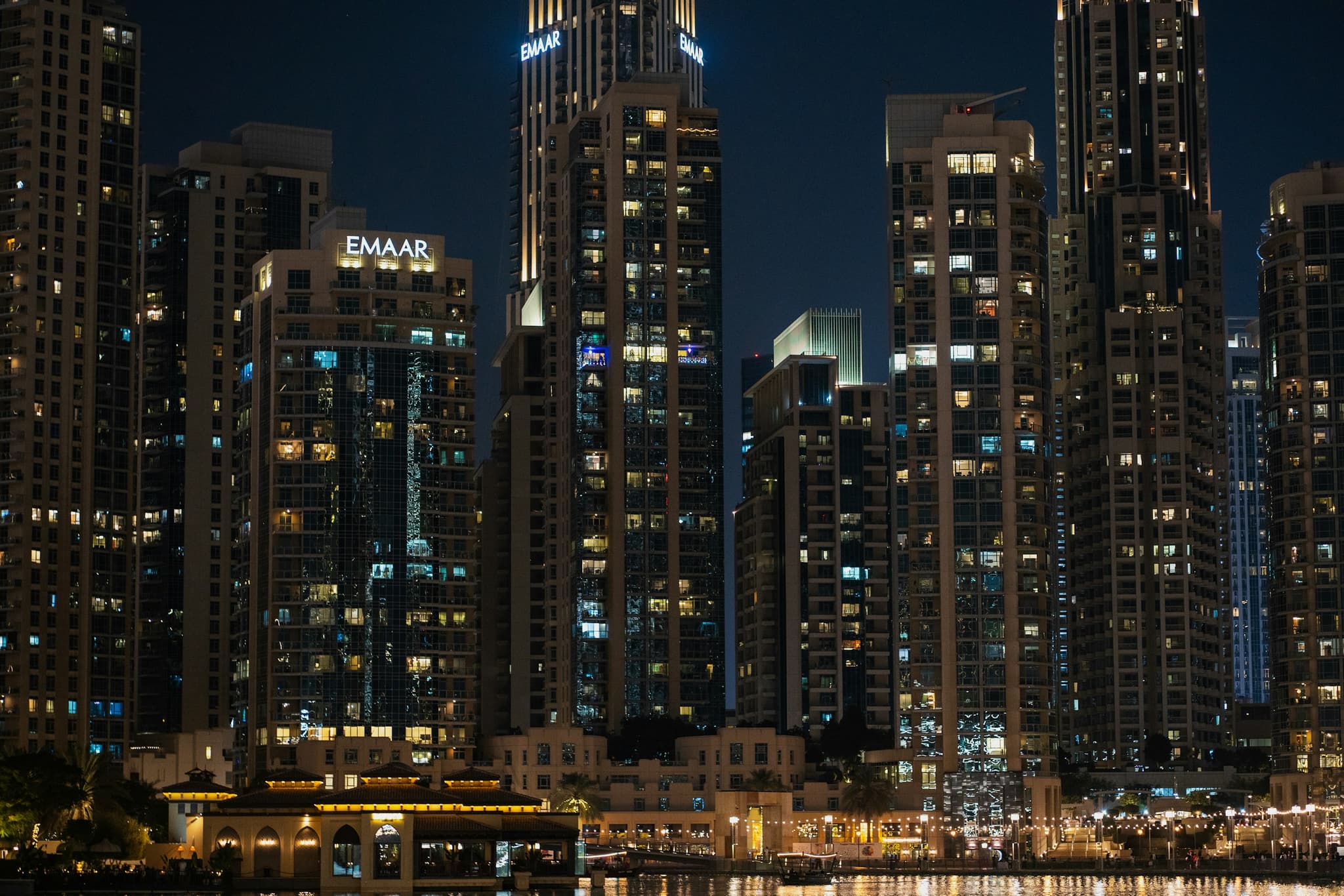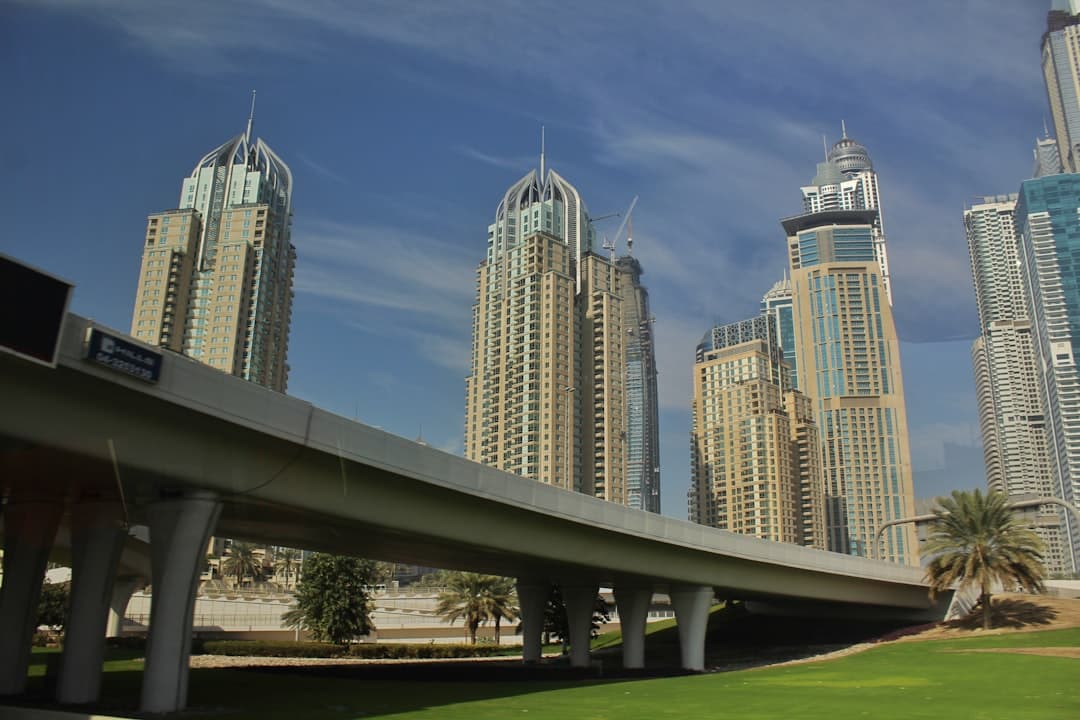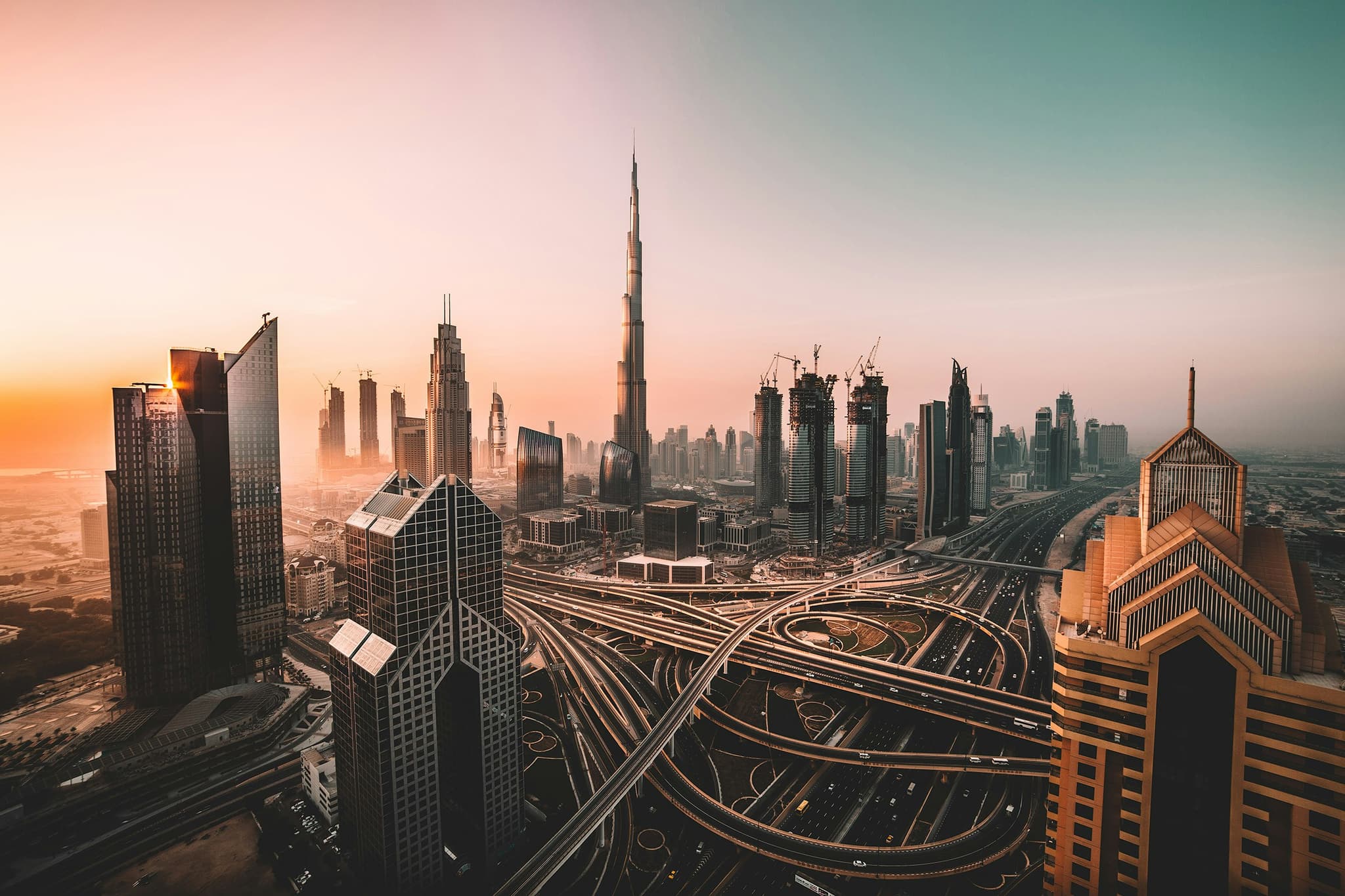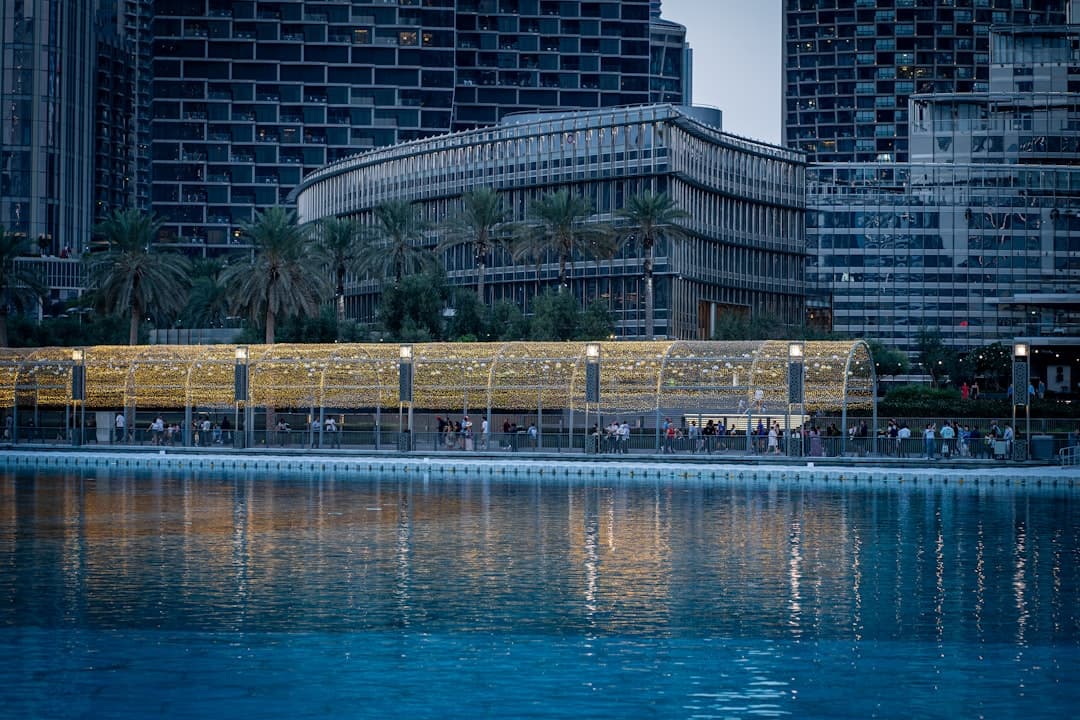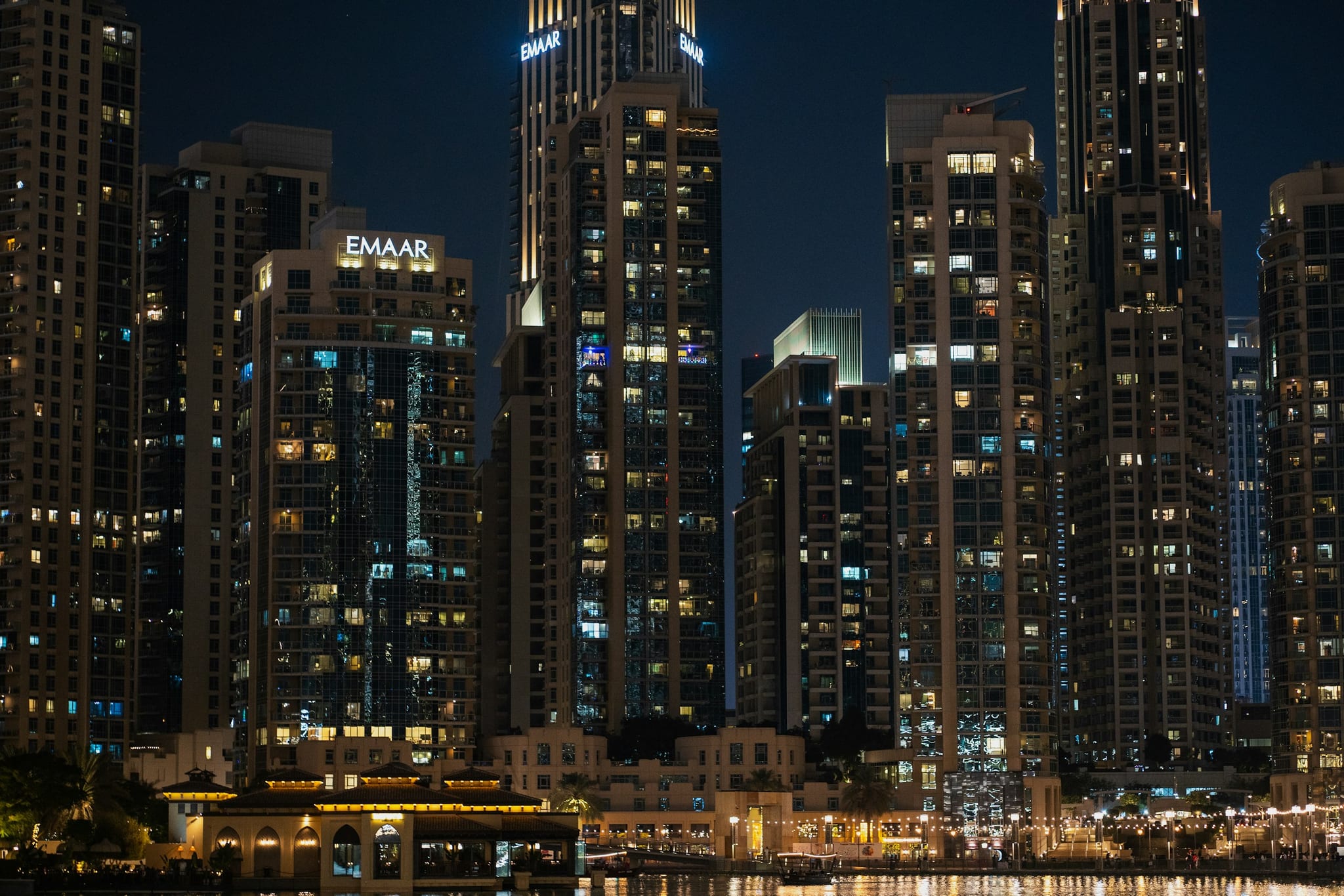
Seen from the ground, Dubai already reads as a city built to be looked at: towers climbing in clusters along the coast, a crescent of reclaimed islands, a desert horizon behind it all. From above, that skyline resolves into something closer to a map, and Dubai has built several distinct ways to see it. The tallest building on the planet has not one but three viewing levels, a slim tower on the Palm looks straight down the trunk of the island to the sea, a 150-metre picture frame in Zabeel Park lines up the old city against the new, and a giant wheel on Bluewaters turns slowly over the Marina and JBR. None of them show quite the same view, and choosing between them is really a question of which version of Dubai you want to see, and from how high. This guide covers each of the main viewpoints in turn, how they compare, when to go, and how a private visit removes the one real drawback they share: the queue.
Want a full guide to Dubai's best viewpoints too? See the Dubai viewpoints guide on gett.travel.
Why Dubai has so many viewpoints
Most cities have one obvious place to see the skyline from above. Dubai has several, and that is really a function of how the city itself is arranged. It grew as a string of distinct districts along the coast rather than one dense centre, so a single viewpoint only ever shows part of the story: Downtown and its towers, the Palm and its trunk of villas, the Marina's dense wall of high-rises, the older creek-side quarters inland. Every major viewpoint the city has built sits in a different one of those districts, which is why they end up showing genuinely different cities rather than the same view repeated from a slightly different height.
That variety is useful, because it means the choice of viewpoint is not really about which is tallest, but about which skyline you want in front of you. Someone who wants the record-breaking view of Downtown and the desert beyond will want a different deck from someone who wants to see the Palm's fronds spread out below them, or the Marina lit up at dusk. Knowing what each one actually shows makes the choice much easier than it looks from a list of names.
Burj Khalifa: At the Top and the higher Sky deck
The Burj Khalifa is the reference point for every other viewpoint in the city, simply because nothing else comes close to its height. Its main observation levels, known as At the Top, sit on the 124th and 125th floors and put visitors in an enclosed and partly open-air deck looking straight down over Downtown, the Dubai Fountain lake, and a desert horizon that on a clear day stretches to the Gulf on one side and open sand on the other. It is the view most people picture when they think of seeing Dubai from above, and it remains the busiest of all the city's viewpoints for exactly that reason.
Above At the Top sits a second, higher level generally sold as the Sky experience, on the 148th floor, closer to the tip of the spire than to the base. The extra height changes the view less than the setting does: the crowd thins out considerably, the deck includes a lounge with refreshments, and the sense of being genuinely near the top of the tower, rather than partway up it, is hard to match anywhere else in the city. For a first visit to the Burj Khalifa, At the Top is the natural choice; for a quieter, more occasion-worthy version of the same view, the higher deck is worth the difference.
Sky Views: a lounge-level alternative near the tower
A short walk from the Burj Khalifa itself, the Address Sky View tower holds another observation option, generally known as Sky Views, set high in a hotel building rather than in the record-holding tower next door. Its main draw is a glass walkway that lets visitors step out over a gap between the two connected towers with a clear floor underfoot, along with an indoor deck and a lounge area looking back at the Burj Khalifa itself, which is the one angle none of the tower's own decks can offer.
Because it sits in a hotel building rather than the main attraction everyone comes to see, Sky Views tends to draw noticeably smaller crowds than At the Top, even at popular times of day. It suits visitors who want a calmer, slower observation deck experience, ideally paired with a drink or a meal, and who are just as interested in photographing the Burj Khalifa from outside as in seeing Downtown from above it.
The View at The Palm: looking down the trunk of the island
The Palm Jumeirah is one of the most recognisable shapes in the city from an aeroplane window, and The View at The Palm, set near the top of a slim tower at the base of the island, is built specifically to show that shape from the ground up. The deck looks straight down the trunk of the Palm toward the crescent breakwater and the open Gulf beyond, with the fronds of villas fanning out to either side and the Marina skyline visible along the coast in the other direction.
It is the one viewpoint in the city built around a single, unmistakable subject rather than a general skyline, and it rewards visitors who already know what the Palm looks like from above and want to see that pattern with their own eyes rather than in a photograph. Combined with time spent on the island itself, at Atlantis or along the boardwalk, it turns a Palm Jumeirah visit into something with both a ground-level and an aerial half.
Dubai Frame: the old city against the new
Set in Zabeel Park between Downtown and the older, low-rise districts toward the creek, the Dubai Frame is a 150-metre golden frame with a glass sky bridge running across the top and viewing floors at each end. Its purpose is different from the other decks: rather than simply gaining height, it is built to physically frame the contrast between the two halves of the city, with historic Deira and Bur Dubai visible through one side and the towers of Downtown and Sheikh Zayed Road through the other.
That makes it less about raw height, since it is far shorter than the Burj Khalifa or even the Palm tower, and more about a single well-composed photograph and a short, clear narrative about how the city has changed. It suits a shorter visit than the taller decks, and works well paired with the older creek-side neighbourhoods rather than as a stand-alone stop.
Ain Dubai: the wheel over the Marina
On Bluewaters Island, just off JBR, Ain Dubai turns slowly over the water, one of the largest observation wheels built anywhere, with enclosed cabins that lift riders in a long, gentle loop rather than the fixed deck of a tower. From the top of the arc, the view opens out over the dense cluster of the Marina's high-rises, the beachfront towers of JBR, and the coastline curving away toward the Palm.
The experience is closer to a ride than a static observation deck, since the whole circuit takes a while and the cabin keeps moving throughout, which makes it a good fit for a relaxed evening around Bluewaters and JBR rather than a quick stop between other sights. Paired with dinner or a walk along the boardwalk below, it turns naturally into an evening built around the water rather than a single photo stop.
How to choose between them
With five genuinely different viewpoints on offer, the easiest way to choose is by what you actually want to see rather than by height alone. For the single most complete view of the skyline and the desert beyond it, the Burj Khalifa's decks are unmatched, with the higher Sky level trading crowd size for a touch more height and calm. For a quieter angle that includes the Burj Khalifa itself in the frame, Sky Views nearby is the better pick. For the Palm's distinctive shape, only The View at The Palm shows it properly. For a short, well-composed sense of old versus new Dubai, the Frame does the job in far less time. For an evening built around the Marina and the water, Ain Dubai suits best.
Most private visits combine one tall, iconic deck with a second, different one nearby, rather than trying to fit all five into a single day. Pairing the Burj Khalifa with a Frame stop on the way back toward the creek, or The View at The Palm with time at Atlantis, tends to work better than treating the viewpoints as a checklist.
Best time to go and a quick checklist
Every one of these viewpoints looks best in the same narrow window: the hour or so around sunset, when the skyline catches warm light before the city's lights come on beneath a darkening sky. Arriving with enough time before sunset to watch the light change, rather than turning up once it is already dark, is what makes the difference between a good photograph and a great one.
- Aim for the hour before sunset so you catch both daylight views and the lit-up skyline afterwards
- Pick one iconic deck and one different angle rather than trying to see all five in a day
- Book the higher Burj Khalifa Sky level if you want a calmer, less crowded version of the classic view
- Pair The View at The Palm with time on the island itself, and the Frame with the older creek-side districts
- Let a private guide handle timed entry and skip the general queue at each stop
Why a private visit makes the difference
The one drawback every one of these viewpoints shares is the queue, since each is one of the most visited attractions in its district and general admission lines can eat up much of an afternoon, especially around sunset when everyone has the same idea. A private visit removes that friction: your guide arranges timed entry, times the arrival for the light rather than for whenever the taxi happens to get there, and can move between two or more viewpoints in a single afternoon without the gaps a group schedule would need. This is exactly the format of our private Dubai viewpoints tour, which strings two or three of these decks into one unhurried afternoon.
It also turns a single ticket into a proper afternoon or evening, since a guide who knows each deck can suggest which pairing suits your interests, point out what you are actually looking at once you reach the top, and fold in a stop at ground level, whether that is the Dubai Mall beneath the Burj Khalifa, Atlantis on the Palm, or the boardwalk below Ain Dubai. Seen this way, Dubai's viewpoints stop being separate tickets to queue for and become one continuous, well-timed look at the city from above. Travelers considering a group-format alternative can find the Dubai viewpoints guide on gett.travel.
Dubai's viewpoints each show a different city rather than the same skyline from a slightly different height: the Burj Khalifa's At the Top and higher Sky decks for the most complete view of Downtown, Sky Views for a quieter angle that includes the tower itself, The View at The Palm for the island's unmistakable shape, the Dubai Frame for old versus new Dubai in one photograph, and Ain Dubai for an evening over the Marina. All of them look best in the hour around sunset, and all of them share the same drawback: long general-admission queues at the busiest times. A private visit, timed for the light and arranged around timed entry, turns any pairing of these viewpoints into one relaxed, uninterrupted look at the city from above.