Among all of Dubai's landmarks the Frame is the one that carries a message. Shaped like an enormous golden picture frame standing 150 metres tall in the greenery of Zabeel Park, it was built to do exactly what its form suggests, to frame the city and to hold its two halves in a single view. Step onto the sky deck at the top and you are literally standing between old and new Dubai: turn one way and the historic creekside districts spread out below you, turn the other and the skyline of the modern city rises on the horizon. It is far less demanding than the tallest towers, quick to visit and gentle on the legs, yet it gives you a way of understanding the city that a higher deck cannot. Get the timing right, come as the afternoon cools towards sunset, and the golden cladding glows while both cityscapes light up. This guide walks through the landmark, the view, the sky bridge and the galleries, and shows why seeing it on a private, unhurried day is the most comfortable way to enjoy it.
What the Dubai Frame is and why it is worth seeing
The Dubai Frame is exactly what it looks like, a colossal golden rectangle 150 metres high and 93 metres wide, set in Zabeel Park close to the heart of the city and opened at the start of 2018. Its two tall towers are joined at the top by a bridge, and the whole structure is clad in a golden pattern that catches the sun and turns the landmark into a beacon at the end of the day. From a distance it reads as pure sculpture; up close its scale and the shimmer of the cladding are genuinely impressive.
What makes it worth a visit is the idea built into the shape. Rather than simply lifting you high above the streets, the Frame positions you deliberately between the two Dubais, the old trading city that grew along the creek and the futuristic metropolis that rose from the desert. It is a calmer, more reflective landmark than the record-breaking towers, and because the visit is short and undemanding it slots easily into a wider day. For anyone who wants to grasp how Dubai has changed rather than just how tall it can build, it is one of the most rewarding stops in the city. If you're comparing Dubai's other skyline viewpoints, the Dubai viewpoints guide on gett.travel covers the full range, from sky decks to sky pools.
Old Dubai on one side, new Dubai on the other
The whole concept of the Frame comes alive on the sky deck, where the two views are deliberately opposed. Look north and you see historic Dubai, the creek winding between Deira and Bur Dubai, the dense low-rise neighbourhoods, the souks and the older residential districts that tell the story of the city before the boom. It is the Dubai of dhows, trading families and narrow lanes, and from up here you can read how the original city hugged the water.
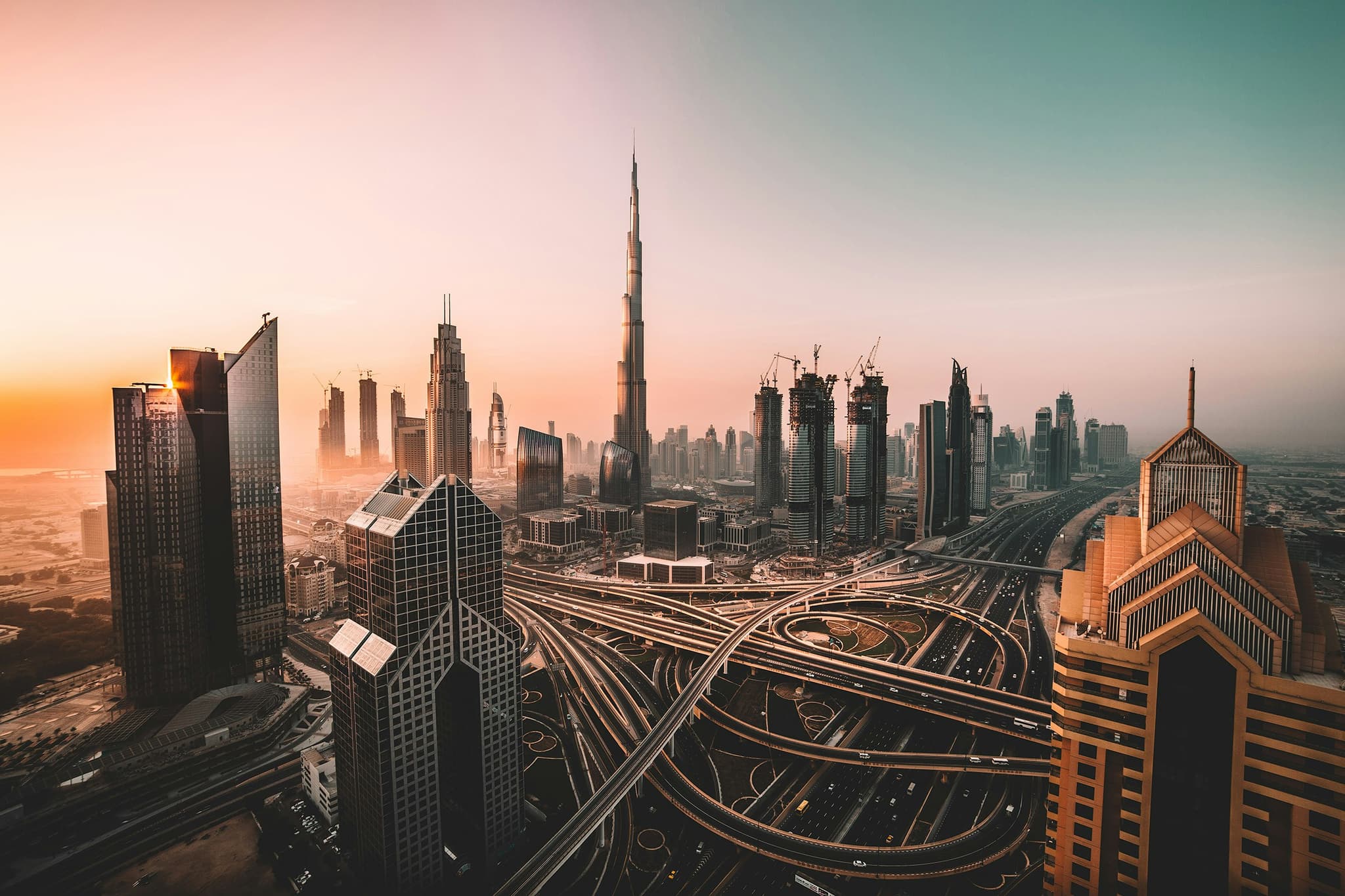
Turn to the opposite rail and the scene changes completely. To the south the modern skyline stands sharp against the sky, the towers of Downtown and Sheikh Zayed Road, Burj Khalifa in the distance and the endless ranks of glass high-rises that define the contemporary city. Holding both views in a single visit is the point of the Frame, and it is what gives the landmark its meaning: the past on one side, the future on the other, and you standing in the frame between them.
The sky deck and the glass bridge
The top of the Frame is a bridge running between the two towers, and the highlight of the whole visit is a stretch of it laid with a transparent glass floor. Step onto it and the ground falls away beneath your feet, with the park and the city visible directly below, a gentle thrill that children and adults both enjoy. The glass is designed to turn from opaque to clear as visitors walk onto it, so the reveal is part of the experience, and there is plenty of solid floor alongside for anyone who would rather admire the view without looking down.
The deck itself is comfortable and unhurried, with room to cross from the old-Dubai side to the new-Dubai side and take your time at each. It is high enough to give a commanding panorama yet low enough that the streets, the park and the creek all stay legible, which is part of why the view feels so different from the highest towers. On a clear late afternoon, with the light warming and the city beginning to switch on, the sky bridge is one of the most photogenic spots in Dubai.
The galleries: from the past to the future
The visit is not only about the view at the top. At ground level, before you go up, a gallery walks you through the story of old Dubai, evoking the trading port and pearling town it once was with sights, sounds and recreated scenes. It sets the historical scene that the northern view will then show you for real, and it gives context that makes the panorama above far richer than a simple photo stop.
After you come down from the sky deck, a second, forward-looking gallery imagines the Dubai of the future, an immersive, atmospheric space that speculates on how the city might keep evolving. The sequence is deliberate: past, present view, future, so the whole visit becomes a short journey through the city's timeline rather than just a trip up and down. Together the galleries turn the Frame from a viewpoint into a small, well-told story of Dubai itself.
The best time to visit and how to plan it
As with most Dubai landmarks, the light decides how good the visit is, and the Frame is at its finest in the late afternoon running into sunset. Arrive a while before the sun drops and you can enjoy both cityscapes in clear daylight, watch the golden cladding glow as the light lowers, and then see both the old and new districts begin to sparkle as their lights come on. The middle of a hot day, by contrast, is bright, hazy and far less comfortable, and best avoided if the schedule allows.
Practically, the Frame sits in Zabeel Park and entry is by ticket, with the visit taking around an hour to an hour and a half at an easy pace. It rarely feels as overwhelming as the tallest attractions, but the sunset window is still the busiest, so arriving with a plan pays off. The landmark also pairs naturally with nearby stops, and on a private day it can be slotted in at precisely the right hour without queuing in the heat or rushing to the next thing.
A quick checklist for visiting the Dubai Frame
A few simple choices make the visit smoother and more memorable:
- Aim for the late afternoon into sunset, when both cityscapes look their best and the frame glows
- Give yourself an hour to an hour and a half to enjoy the galleries as well as the sky deck
- Walk across the glass floor on the bridge for the signature view straight down
- Take time at both rails, north for old Dubai and the creek, south for the modern skyline
- Combine it with a wider private day so you arrive at the ideal hour without queuing in the heat
Why a private visit to the Dubai Frame works best
The Frame is an easy landmark, but the difference between a flat visit and a memorable one comes down to timing and context, and both are exactly what a private day provides. Your guide brings you at the hour when the light is right and the crowds are thinnest, handles the ticket so there is no queuing, and explains what you are seeing on each side, turning the old-and-new view from a nice photo into a genuine understanding of how Dubai grew. The car waits close by, so there is no walking across the park in the heat before or after.
It also fits beautifully into a larger itinerary. Because the visit is short and gentle, the Frame works as one calm chapter in a private day that might take in the old creekside districts it overlooks, the modern Downtown it faces, or a sunset elsewhere afterwards. Seen this way, unhurried, well timed and explained, the landmark delivers on its own promise: a single, quiet moment standing between the two Dubais, arranged entirely around you.
The Dubai Frame is the city's most thoughtful landmark, a 150-metre golden frame that sets old Dubai on one side and the modern skyline on the other and lets you stand in the middle of both. Come in the late afternoon into sunset, give yourself time for the galleries as well as the glass-floored sky bridge, and take a moment at each rail to read the two Dubais against each other. It asks far less of you than the tallest towers yet says more about the city, and arranged as an unhurried private visit, with the ticket handled, the hour chosen and a car waiting in the park below, it becomes one of the calmest and most meaningful highlights of a trip.