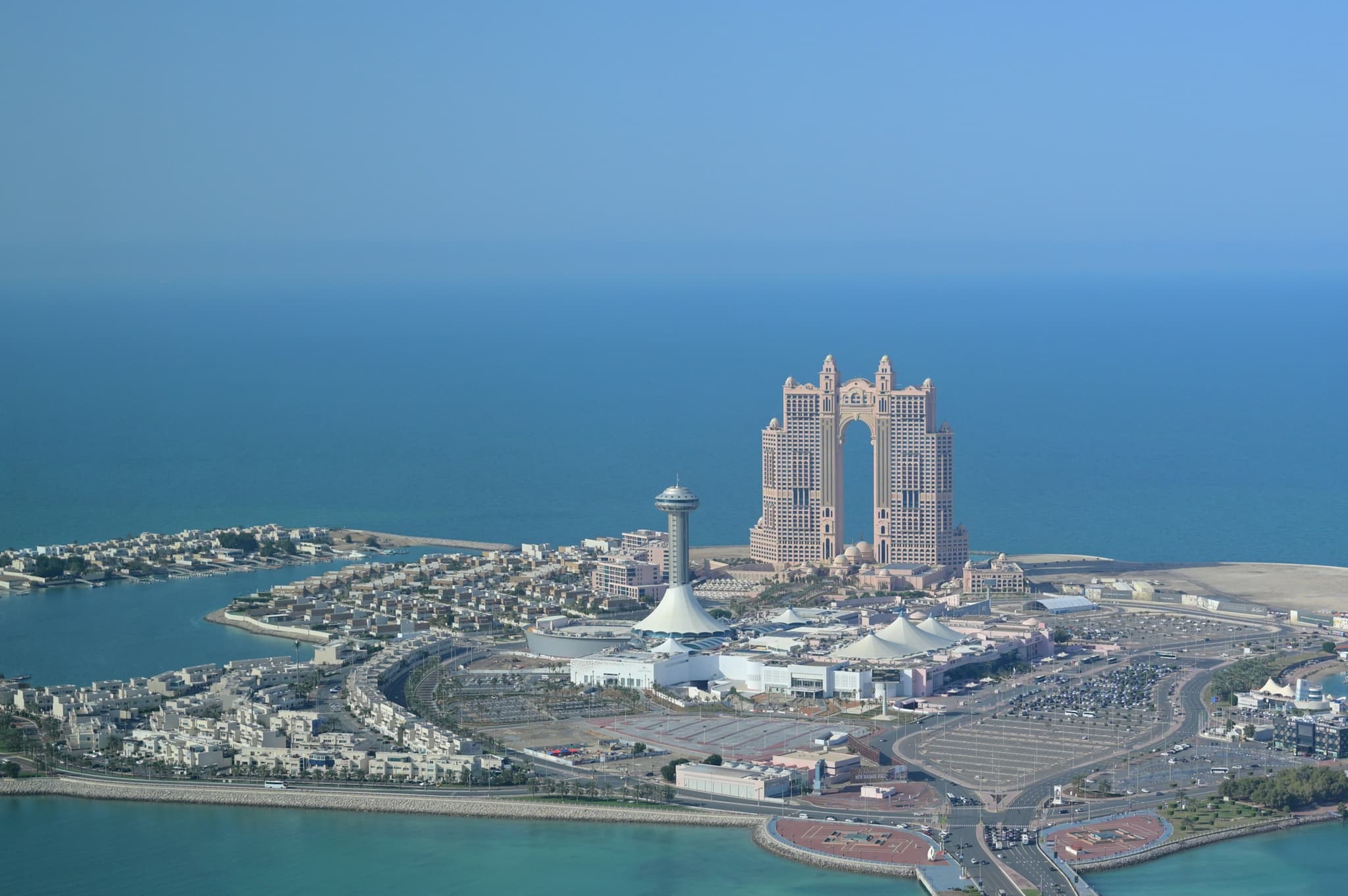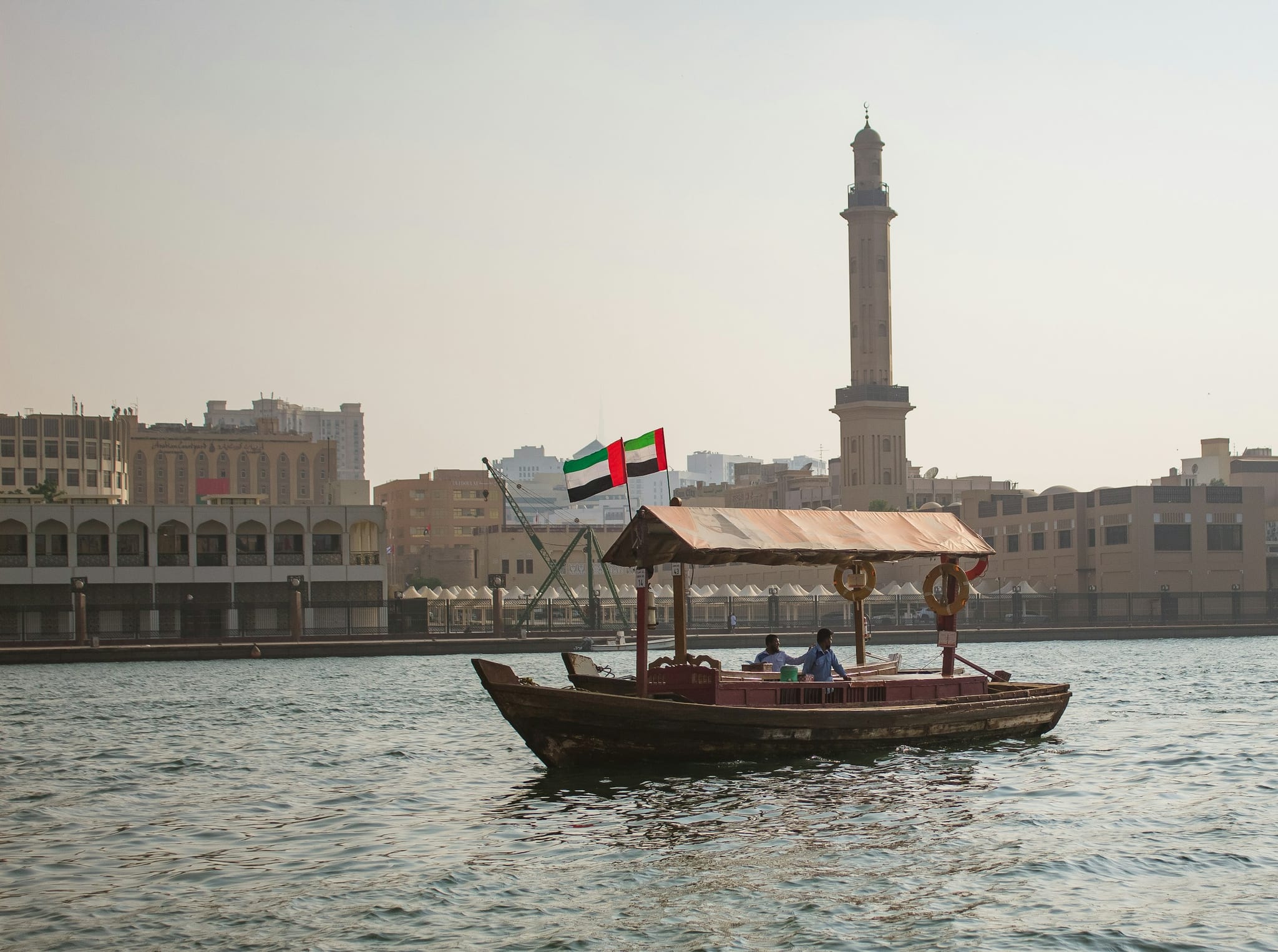
From June to September, Abu Dhabi trades its winter ease for real heat and thick, coastal humidity, and the city visibly adapts: life moves indoors and after dark, malls fill up at lunchtime, and the Corniche empties out by mid-morning. None of that makes summer a bad time to visit. The Louvre Abu Dhabi and Qasr Al Watan are just as extraordinary in July as in January, the theme parks on Yas Island are built to be enjoyed regardless of the weather outside, and the beaches and pools are warmer than ever. What changes is the plan: a summer day in Abu Dhabi rewards visitors who work with the heat rather than against it, front-loading the outdoors into the cool edges of the day and letting air conditioning carry the middle. This guide sets out how.
Summer in Abu Dhabi: what to actually expect
Abu Dhabi's summer runs roughly from June to September, with July and August at their most intense. Daytime temperatures climb well into the forties, and because the city sits on the Gulf, humidity often does more damage than the raw heat reading suggests: a short walk outside can feel far heavier than the same walk in the dry heat of a desert climate. Evenings cool only a little, and the sun is at its strongest through the middle of the day, roughly from late morning until mid-afternoon.
The upside is real. Summer is Abu Dhabi's quiet season: fewer coach groups at the big landmarks, shorter waits inside the museums and theme parks, and a city that, after dark, is genuinely pleasant to walk through. Locals treat summer as mall season and evening-terrace season rather than a reason to stay home, and a visitor who copies that rhythm, cool mornings, air-conditioned afternoons, warm evenings outdoors, gets just as full a day as in the cooler months, just arranged differently.
The best air-conditioned attractions
Abu Dhabi's flagship sights are, conveniently, mostly indoors or shaded, which makes them the natural spine of a summer itinerary. The [Louvre Abu Dhabi](/attractions/louvre-abu-dhabi) sits under its famous dome on Saadiyat Island, and its galleries stay a comfortable temperature no matter what the thermometer outside is doing; a two- to three-hour visit in the early afternoon is one of the best uses of the hottest part of the day. Qasr Al Watan, the presidential palace, works the same way: its courtyards can be warm, but the vast domed halls and library inside are cool and often the most memorable part of the visit anyway.
Warner Bros World on Yas Island is a fully indoor theme park, rides, shows and all, and it is arguably a better summer choice than a winter one, since there is no queueing in direct sun between attractions. The city's malls, Yas Mall, The Galleria and Al Wahda Mall among them, do double duty as shopping destinations and de facto climate shelters, with enough restaurants and entertainment inside that an afternoon can pass there without ever stepping back into the heat.
Cooling off: water and beach options
Water is the other half of a good summer plan, and Abu Dhabi has it in several forms. Yas Waterworld is built for exactly this weather, with the water itself far more refreshing than the air, and it pairs naturally with a visit to Yas Island in general. Hotel pool and beach clubs, many of them open to day guests, offer a calmer, more resort-style version of the same idea, sun loungers, shaded cabanas and a pool or private beach a few steps away.
The public Corniche beach is still swimmable in summer, and the water itself is warm rather than uncomfortable, but the trick is timing: an early swim before roughly nine in the morning, while the sand and air are still bearable, is far more pleasant than the same beach at midday. Some visitors build a whole rhythm around this, an early dip before breakfast, followed by an indoor day, then a return to the water once the sun has dropped in the late afternoon.
How to pace a private summer day
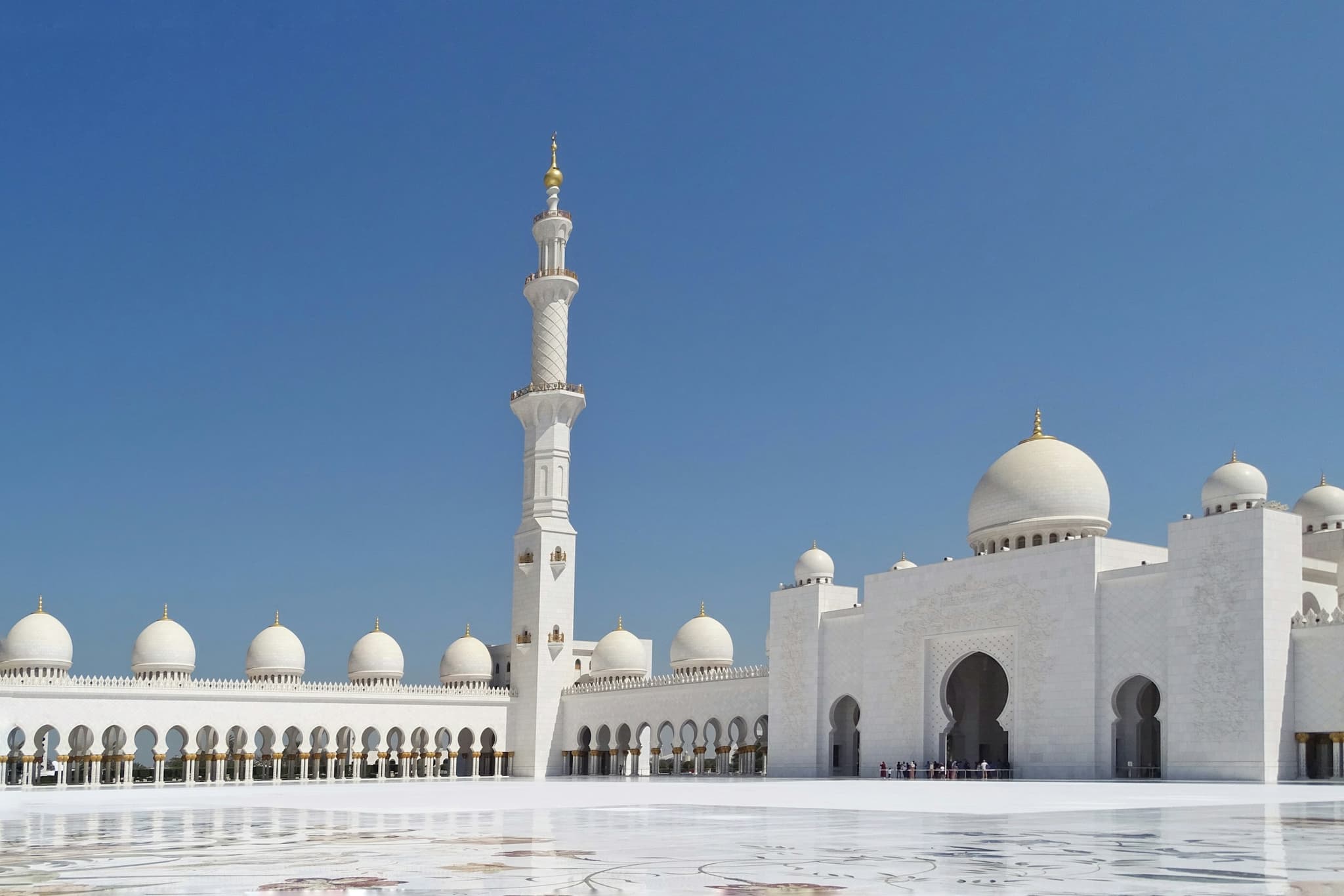
The single most useful idea for a summer visit is to think of the day in three blocks rather than one continuous itinerary. The early block, roughly sunrise until mid-morning, is for anything outdoors: a walk on the Corniche, an early beach swim, or photographs at [Qasr Al Watan](/attractions/qasr-al-watan) or the Sheikh Zayed Grand Mosque before the heat and the crowds both build. The middle block, through the hottest hours, belongs indoors: the Louvre, Qasr Al Watan's interiors, Warner Bros World or a long, unhurried lunch. The evening block, once the sun has lost its edge, is for anything you want to see outside again, a Corniche walk, a rooftop dinner, or simply sitting by the water.
This is exactly where a private car and driver earn their keep in summer. Rather than walking between sights or waiting at a bus stop in the heat, you move between the outdoor and indoor blocks in a cooled car, and the driver can shift the plan on the day if the heat is worse than expected or a museum turns out to deserve more time than planned.
A sample summer day in Abu Dhabi
A day built around this rhythm might start with a departure from Dubai in the very early morning, reaching Abu Dhabi in time to see the Sheikh Zayed Grand Mosque and Qasr Al Watan's courtyards while the light is soft and the heat has not yet built. By mid-morning, the group moves to an air-conditioned lunch and then into the Louvre Abu Dhabi or Qasr Al Watan's interior halls for the hottest hours, with Warner Bros World or a mall as an alternative for families travelling with children. As the sun weakens in the late afternoon, the day closes with a walk or a swim on the Corniche, or a stop at Yas Waterworld, before the drive back to Dubai in the cool of the evening.
The details flex around the group, some visitors prefer more museum time, others more water, but the underlying shape stays the same: outdoors at the edges of the day, indoors through the middle.
Practical tips for a summer visit
A little preparation makes an enormous difference to how a summer day in Abu Dhabi actually feels. A few things worth keeping in mind:
- Drink more water than feels necessary, dehydration in this humidity happens faster than it seems
- Dress in light, breathable fabrics, and keep a light layer for strongly air-conditioned interiors
- Wear sunscreen and a hat even for short walks between the car and a doorway
- Book indoor attractions like the Louvre or Warner Bros World for the early afternoon, when the heat is worst
- Swim early, before mid-morning, rather than at midday, for a far more comfortable beach or pool session
- Keep transfers in a cooled private car rather than walking long distances between sights
Planning a private summer day from Dubai
Abu Dhabi is around ninety minutes from Dubai, close enough that a summer day trip works just as well as a winter one, provided the schedule respects the heat. On a group tour, that flexibility rarely exists: the bus leaves and arrives on a fixed clock regardless of how the sun is behaving. On a private day, the timing bends around the weather instead, an earlier start if the forecast calls for it, more time inside the Louvre if the midday heat is fierce, a later return so the evening Corniche walk isn't rushed.
That is the kind of day we build at Gett Travel: a [private tour of Abu Dhabi](/tours) from your Dubai hotel, paced around the heat rather than a fixed script, with the option to add [Yas Island's parks](/tours) or extend into a longer [private Abu Dhabi day](/attractions/louvre-abu-dhabi). Message us on WhatsApp and we will put together a summer itinerary that keeps the group cool, comfortable and still seeing everything worth seeing.
Turn it into a private tour
The pacing described above is what the Abu Dhabi day tour is built to deliver, a full private day shaping the capital's highlights around your interests, with an air-conditioned car doing the work between the outdoor and indoor blocks.
A summer visit to Abu Dhabi is not a compromise, it is a different, quieter version of the same city, best enjoyed by working with the heat instead of fighting it. Save the Louvre, Qasr Al Watan's interiors and Warner Bros World for the hottest hours, use the water at Yas Waterworld or the Corniche in the cooler morning and evening windows, and let a private car carry you between the two rather than walking through the midday sun. Message us on WhatsApp and we will build a summer day in Abu Dhabi that stays comfortable from the first stop to the last.